
The Simple Scuba Snorkel Love Hate Relationship
Article by Marc A. Morale
The simple scuba snorkel. A piece of J-shaped plastic universally taught as essential in entry level scuba diving courses, is surprisingly one of the most hotly debated items in a scuba diver’s gear bag. Novice divers typically don’t think twice about owning and using one. However, experienced divers tend to be sharply divided. The debate typically boils down to surface utility versus underwater entanglement avoidance.
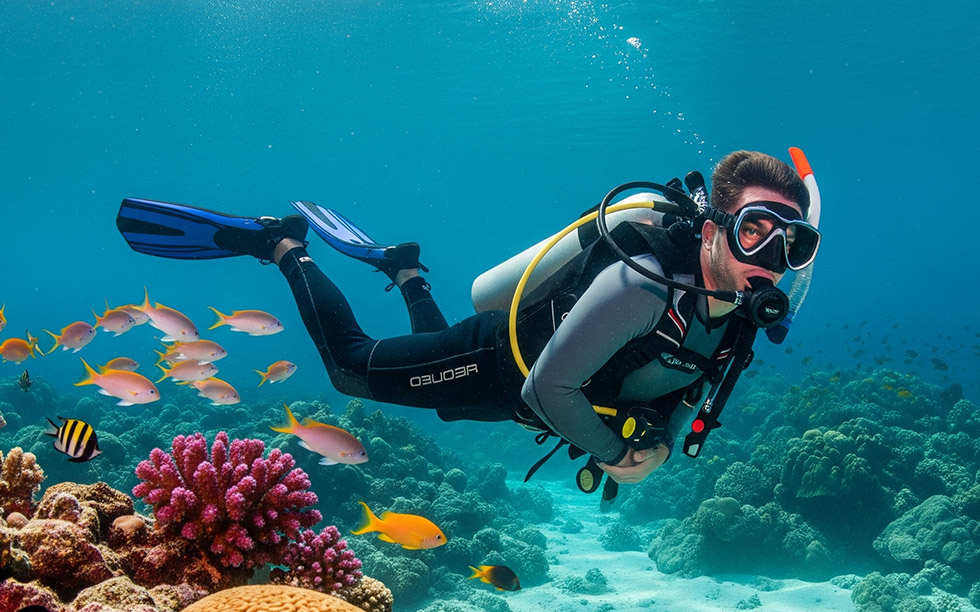
Ask a technical diver and most will say they avoid mounting a snorkel to their mask when diving because:
Entanglement risk: A prominent safety concern for technical divers is entanglement in guidelines, which are vital for navigation in caves, wrecks, and beneath ice. A rigid, dangling snorkel is an unnecessary entanglement hazard that could interfere with equipment or a critical ascent or descent line.
Mask interference: A snorkel can tug on the mask strap in strong currents or if it gets bumped, causing the mask to leak or flood. Maintaining a clear mask is critical for staying aware of surroundings and managing complex equipment.
Incorrect regulator retrieval: Technical divers use specialized gas configurations, often with multiple regulators. The presence of a snorkel can cause confusion during an emergency air-sharing procedure, potentially causing the diver to grab the wrong item and inhale water.
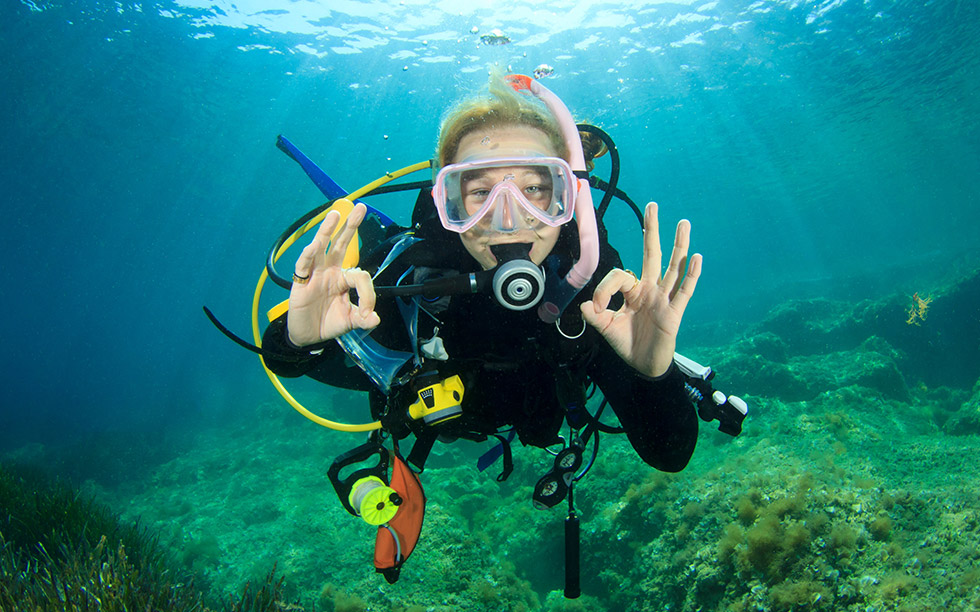
Ask a novice sport diver and most will tell you that they mount a snorkel to their mask when diving because:
Tank air conservation: Using a snorkel saves the air in your tank. If your dive plan requires a long surface swim, perhaps from shore to the reef or back to a boat, using your regulator needlessly depletes your air supply.
Surface safety: A snorkel provides a safety net when you are on the surface. If you surface with low air and perhaps unexpectedly far from your exit, then the snorkel can assist in your comfortable surface swim.
Pre-Dive site scouting: A snorkel is a fundamental tool for effective pre-dive procedures. Before committing to your heavy gear, a mask and snorkel allow you to jump into the water to perform a quick site assessment. You can check the current, look for the anchor line, verify visibility, or scout the general location of the reef. This reconnaissance saves you time, prevents wasting air on a descent you might abort, and helps you formulate a more effective, low-stress dive plan.
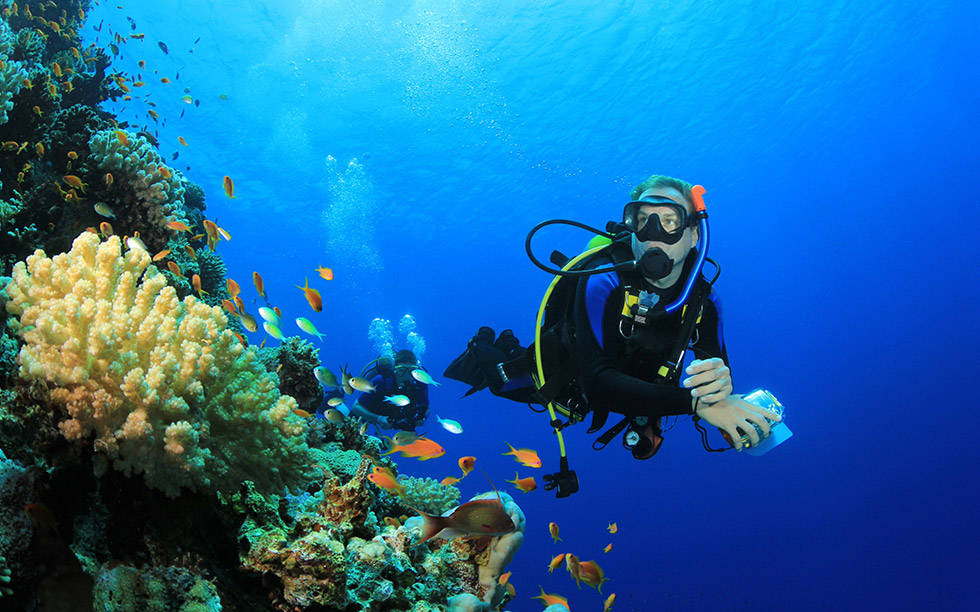
Still conflicted? Here are some alternative options:
Pocket snorkel: A flexible, foldable snorkel can be stored compactly in a BCD pocket or clipped to a harness. This makes the snorkel available for surface use when needed but keeps it safely out of the way during the dive.
Surface swimming on the back: For long surface swims, technical divers can simply turn onto their backs and use their regulators or inflate their BCDs for buoyancy. This is often more comfortable and safer than swimming face-down with a snorkel.
As for me… I am a scuba diving instructor. Agency standards require that I have a snorkel as part of my basic kit. When I teach entry level divers and sport diving specialties, I lead by example and always wear a snorkel on my mask. If I were teaching a technical course that used lines or perhaps had an overhead environment, then I’d switch to a pocket snorkel.
So what about you? Use one? Hate them? Why???
 https://www.tdisdi.com/wp-content/uploads/2026/01/Diving-St.-Eustatius.jpg
628
1200
Joan Solé García
https://www.tdisdi.com/wp-content/uploads/2021/10/header-web-live.png
Joan Solé García2026-01-29 03:00:232026-01-29 03:00:23Diving St. Eustatius
https://www.tdisdi.com/wp-content/uploads/2026/01/Diving-St.-Eustatius.jpg
628
1200
Joan Solé García
https://www.tdisdi.com/wp-content/uploads/2021/10/header-web-live.png
Joan Solé García2026-01-29 03:00:232026-01-29 03:00:23Diving St. Eustatius https://www.tdisdi.com/wp-content/uploads/2026/01/Best-Days-to-Dive.jpg
628
1200
Joan Solé García
https://www.tdisdi.com/wp-content/uploads/2021/10/header-web-live.png
Joan Solé García2026-01-28 04:54:352026-01-28 04:54:35The Best Days to Dive
https://www.tdisdi.com/wp-content/uploads/2026/01/Best-Days-to-Dive.jpg
628
1200
Joan Solé García
https://www.tdisdi.com/wp-content/uploads/2021/10/header-web-live.png
Joan Solé García2026-01-28 04:54:352026-01-28 04:54:35The Best Days to Dive https://www.tdisdi.com/wp-content/uploads/2026/01/Looking-Beyond-the-Dive-Show-Floor.jpg
628
1200
Joan Solé García
https://www.tdisdi.com/wp-content/uploads/2021/10/header-web-live.png
Joan Solé García2026-01-26 05:20:292026-01-26 16:49:00Looking Beyond the Dive Show Floor
https://www.tdisdi.com/wp-content/uploads/2026/01/Looking-Beyond-the-Dive-Show-Floor.jpg
628
1200
Joan Solé García
https://www.tdisdi.com/wp-content/uploads/2021/10/header-web-live.png
Joan Solé García2026-01-26 05:20:292026-01-26 16:49:00Looking Beyond the Dive Show Floor https://www.tdisdi.com/wp-content/uploads/2026/01/ANTARCTIQUE.jpg
628
1200
Joan Solé García
https://www.tdisdi.com/wp-content/uploads/2021/10/header-web-live.png
Joan Solé García2026-01-22 06:32:542026-01-22 06:32:54ANTARCTICA
https://www.tdisdi.com/wp-content/uploads/2026/01/ANTARCTIQUE.jpg
628
1200
Joan Solé García
https://www.tdisdi.com/wp-content/uploads/2021/10/header-web-live.png
Joan Solé García2026-01-22 06:32:542026-01-22 06:32:54ANTARCTICA https://www.tdisdi.com/wp-content/uploads/2026/01/women-idc.jpg
628
1200
Joan Solé García
https://www.tdisdi.com/wp-content/uploads/2021/10/header-web-live.png
Joan Solé García2026-01-21 04:55:202026-01-22 08:16:54Women’s IDC – May 23-31, 2026
https://www.tdisdi.com/wp-content/uploads/2026/01/women-idc.jpg
628
1200
Joan Solé García
https://www.tdisdi.com/wp-content/uploads/2021/10/header-web-live.png
Joan Solé García2026-01-21 04:55:202026-01-22 08:16:54Women’s IDC – May 23-31, 2026 https://www.tdisdi.com/wp-content/uploads/2026/01/women-who-tech-dive-tamara-thomsen.jpg
628
1200
Joan Solé García
https://www.tdisdi.com/wp-content/uploads/2021/10/header-web-live.png
Joan Solé García2026-01-19 04:46:442026-01-19 04:46:44Women Who Tech Dive Tamara Thomsen
https://www.tdisdi.com/wp-content/uploads/2026/01/women-who-tech-dive-tamara-thomsen.jpg
628
1200
Joan Solé García
https://www.tdisdi.com/wp-content/uploads/2021/10/header-web-live.png
Joan Solé García2026-01-19 04:46:442026-01-19 04:46:44Women Who Tech Dive Tamara Thomsen https://www.tdisdi.com/wp-content/uploads/2026/01/DI-Scubility-Program.jpg
628
1200
Joan Solé García
https://www.tdisdi.com/wp-content/uploads/2021/10/header-web-live.png
Joan Solé García2026-01-15 01:42:552026-01-15 01:42:55SDI Scubility Program
https://www.tdisdi.com/wp-content/uploads/2026/01/DI-Scubility-Program.jpg
628
1200
Joan Solé García
https://www.tdisdi.com/wp-content/uploads/2021/10/header-web-live.png
Joan Solé García2026-01-15 01:42:552026-01-15 01:42:55SDI Scubility Program https://www.tdisdi.com/wp-content/uploads/2026/01/Diving-for-Mental-Health.jpg
628
1200
Joan Solé García
https://www.tdisdi.com/wp-content/uploads/2021/10/header-web-live.png
Joan Solé García2026-01-14 04:18:042026-01-14 04:18:04Diving for Mental Health
https://www.tdisdi.com/wp-content/uploads/2026/01/Diving-for-Mental-Health.jpg
628
1200
Joan Solé García
https://www.tdisdi.com/wp-content/uploads/2021/10/header-web-live.png
Joan Solé García2026-01-14 04:18:042026-01-14 04:18:04Diving for Mental Health
Pocket Snorkel
I’m pro Pocket Snorkel. I like having one when on the surface before or after a dive, especially for surface swims if I’m not on my back.
Post dive on a dive trip, I enjoy floating in the ocean relaxing, and looking at the sea life below. Great for if the boat is a little crowded or you want to stay cool, or discreetly use the “baño grande” (be polite and avoid being around people, and don’t forget to flush your suit)
I always have a snorkel with me, it’s part of my dive kit.
Only when it is required by standards as in Open Water training. Personally, I do not like snorkels.
I love them for snorkeling or free diving, but can’t stand them otherwise. Having spent 30 years in kelp forests, snorkels can be entanglement hazards even in recreational settings.
I never got the argument about needing one to breathe at the surface. If you’re at the surface and cannot get your airway high enough out of the water to breathe comfortably, then you’re probably over weighted. I’ve always done long surface swims on my back.
That being said a free diving snorkel lives bungeed to my backplate solely to comply with standards. I have it upside down (so that it drains when my BP is hung up) with the bend just behind my left shoulder so I can reach it easily should I ever find a need for it. I can probably get it fully deployed faster than a diver with a pocket snorkel can get theirs out of their pocket.
Marc, I agree with your article – well written. I like how you showcased why we teach students at differing levels the reason why we use or carry a snorkel.
As a diving instructor and side-mount Cave Diver, I understand both view points. Teaching student how to use a snorkel properly for surface swims and dive site recons helps my team identify students who have difficulty breathing while their face is in the water. During Scuba dives we train divers to surface swimming on our back after training. I find surface swimming on our back can be an opportunity to conduct post-dive training and provides an opportunity for divers to self evaluate their strengths and challenges experienced during the dive.