
Scubility
I frequently field calls from members who are unsure of what level a diver should be within the Scubility program due to a person’s disability. The first question that really needs to be answered is whether that person should be in the Scubility program at all. Unfortunately, we frequently try to box someone in based on what we perceive of them.
Many of the phone calls that I receive go like this. “I have a customer that has come in that has X disability. What level of DB diver should they be?” It’s understandable that we see the disability and try to figure out how to provide for this person. However, the mistake we frequently make is defining their ability based on the disability we see. The truth is that we don’t know yet.
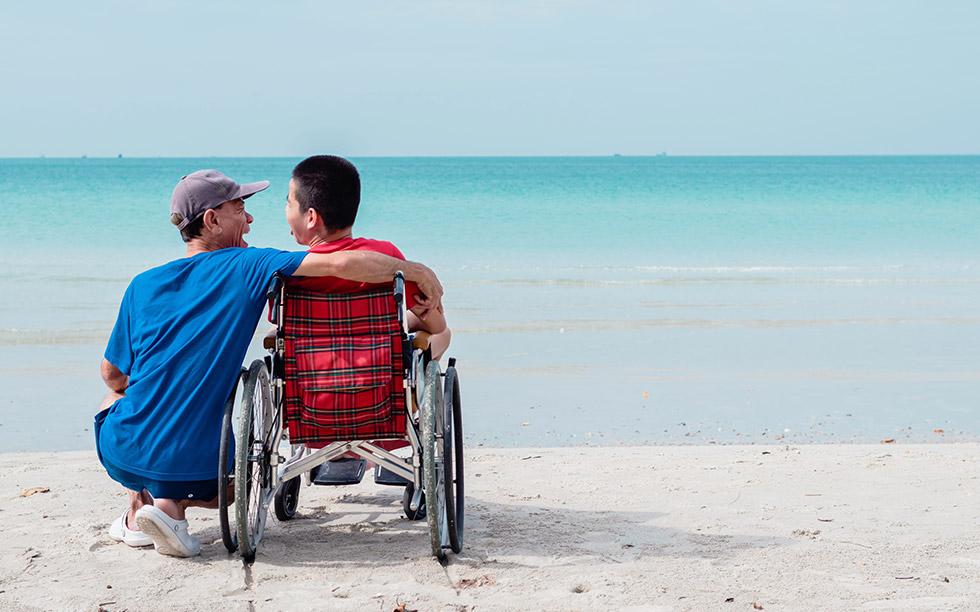
Considerations for Scubility.
Disabilities can be defined on a spectrum. Many of these people that we are helping get into the diving world are still very high functioning in their ability. Their disability has likely not progressed or degenerated to the point where advanced levels of care are necessary yet. I have a very good friend that I like to point to in these situations. He got into diving before Adaptive techniques or the Scubility program ever really existed. He had to prove that he was every bit as capable as any other diver because alternative certifications did not exist. He actually went all the way to being an Open Water Scuba Diver Instructor without any modifications to the training programs to accommodate for his disability. What was his disability? He is an amputee from mid-thigh down on his right leg.
I tell people about my friend because of what he would likely go through today. Too often he would be pushed towards the Scubility program because of his missing leg. Why? There are multiple reasons that this will happen, there is a perception that we are doing this customer a favor by making the program “easier” on them. There is a perception that there is a higher liability on the facility or instructor if the customer is not placed in a Scubility program. The truth is, neither of these are necessarily true.
So, what should we be doing?
This is honestly the easiest answer. We should be assessing the abilities of our students during the entire course. Did I just tell you to do the same thing that you do for everyone in your courses? Yes, a disabled diver is no different in that respect. The truth is that we won’t know for sure what level of certification they will be until we have evaluated all skills with them in the water and determined what level of modification of skills they will need or which skills they are capable of performing.
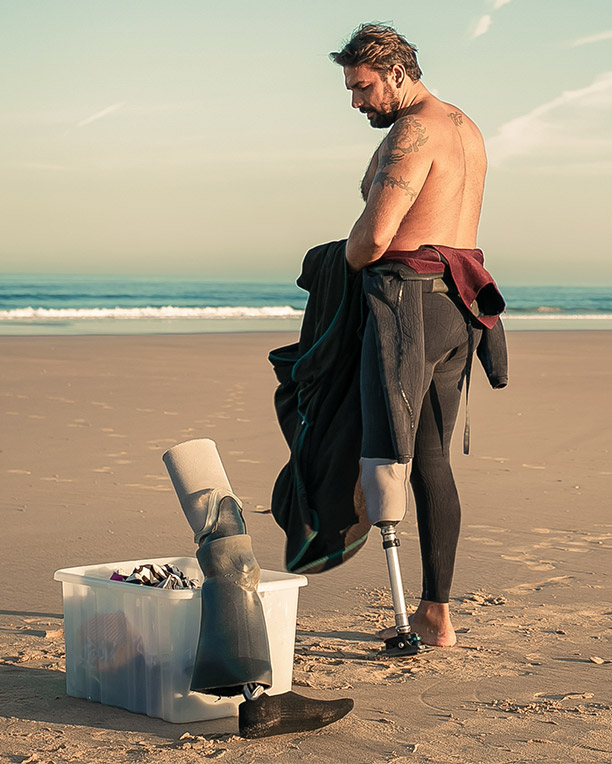
How should an instructor decide what DB level to certify the student at?
We have a DB1 certification level, but lets think about this level. I would argue that it should be used very rarely. A DB1 diver is someone that has completed all performance requirements, demonstrated all skills, can perform a self rescue, and can provide equal assistance to a buddy. Why can this student not be certified as a standard diver then? This is where the instructor may choose to certify the student as an Open Water Scuba Diver, or the instructor can choose to use their discretion. There may be additional information that the instructor is aware of such as knowing that the disability that the diver has is degenerative and is highly likely to progress later causing the diver to need additional considerations. This is the most likely reason that an instructor may choose to register the diver as a DB1 Open Water Scuba Diver instead of a standard Open Water Scuba Diver. This allows for future facilities or professionals that the diver encounters to know that additional care may be necessary. There are also secondary conditions that an instructor may consider such as issues that are somewhat unique to spinal cord injury victims/congenital spinal cord issues. These students may have extremely reduced or no sensory perception in different parts of their body. So, pain, and irritation to extremities with the reduced or zero sensory ability can manifest itself in a different way such as headaches or agitation even though the student is completely unaware of the cause in many cases. This may cause the instructor to certify the student as a DB1 diver for the sole reason that other instructors, professionals, or dive buddies need to keep an eye out for this situation. However, it does not limit the diver’s ability to dive like anyone else. In any of these situations, communication with the student is absolutely necessary so that they understand why they are being issued a DB certification over a standard certification and everyone involved is comfortable with the reasoning.
A DB2 diver has completed all of the performance requirements and can perform a self rescue. However, the student is not able to provide assistance to a buddy. Because the student cannot provide assistance to a buddy. A second adult buddy needs to dive with this level of disabled diver so that assistance is available to all divers in the team. One of the 2 dive buddies should also be a certified rescue diver or higher.
Finally, we have the DB3 diver. This student has completed the performance requirements and has demonstrated that they may safely use Scuba gear in the water. But they are not able to perform a self rescue or assist a buddy. This diver also needs the assistance of 2 dive buddies. However, one of the dive buddies must be certified as a scubility dive buddy due to the additional considerations that a DB3 diver will frequently need such as modified ingress or egress from the water and assisted swimming techniques. The second dive buddy can provide assistance but is also able to provide assistance to the Scubility dive buddy if needed.
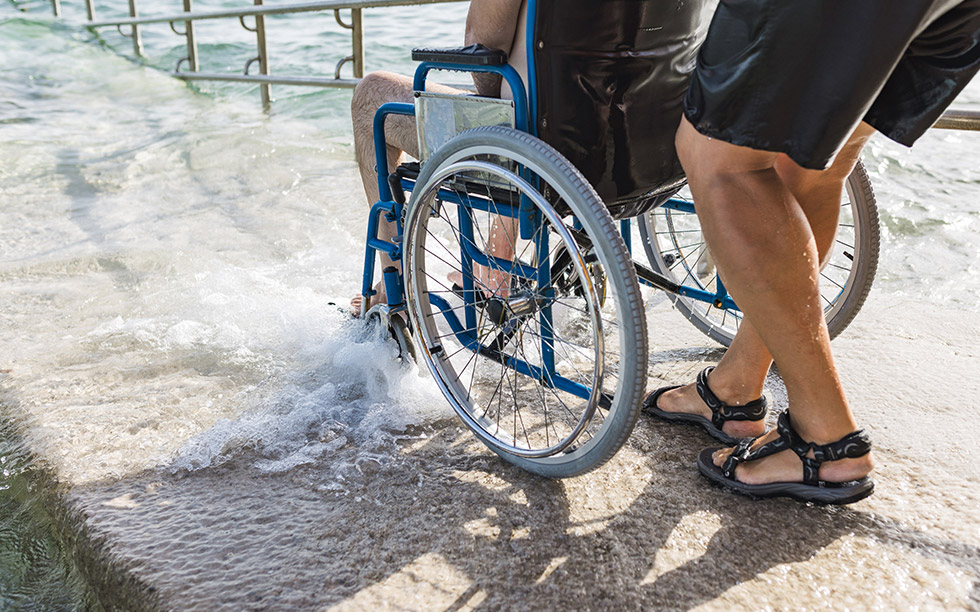
What should we take away from this information?
The big thing to take away from this article is that divers with disabilities do not necessarily need to be pushed into the Scubility program if their disability does not prevent them from completing all graduation requirements for a course and the disability is considered stable. So, before you force them into a program that may not be necessary, discuss with them the expectations for a standard certification and let them know that there will be a continuing evaluation of their performance during the course. Make sure to communicate respectfully. In the end, you might be surprised by how capable a person is.
 https://www.tdisdi.com/wp-content/uploads/2026/01/Considerations-for-Scubility.jpg
628
1200
Joan Solé García
https://www.tdisdi.com/wp-content/uploads/2021/10/header-web-live.png
Joan Solé García2026-01-12 05:58:402026-01-12 05:58:40Scubility
https://www.tdisdi.com/wp-content/uploads/2026/01/Considerations-for-Scubility.jpg
628
1200
Joan Solé García
https://www.tdisdi.com/wp-content/uploads/2021/10/header-web-live.png
Joan Solé García2026-01-12 05:58:402026-01-12 05:58:40Scubility https://www.tdisdi.com/wp-content/uploads/2026/01/Mentorship-in-Technical-Diving.jpg
628
1200
Joan Solé García
https://www.tdisdi.com/wp-content/uploads/2021/10/header-web-live.png
Joan Solé García2026-01-08 04:31:582026-01-08 04:31:58Mentorship in Technical Diving
https://www.tdisdi.com/wp-content/uploads/2026/01/Mentorship-in-Technical-Diving.jpg
628
1200
Joan Solé García
https://www.tdisdi.com/wp-content/uploads/2021/10/header-web-live.png
Joan Solé García2026-01-08 04:31:582026-01-08 04:31:58Mentorship in Technical Diving https://www.tdisdi.com/wp-content/uploads/2026/01/Knees-Off-The-Bottom.jpg
628
1200
Joan Solé García
https://www.tdisdi.com/wp-content/uploads/2021/10/header-web-live.png
Joan Solé García2026-01-07 05:05:202026-01-07 05:05:20Knees Off The Bottom
https://www.tdisdi.com/wp-content/uploads/2026/01/Knees-Off-The-Bottom.jpg
628
1200
Joan Solé García
https://www.tdisdi.com/wp-content/uploads/2021/10/header-web-live.png
Joan Solé García2026-01-07 05:05:202026-01-07 05:05:20Knees Off The Bottom https://www.tdisdi.com/wp-content/uploads/2026/01/When-Divers-Disappear.jpg
628
1200
Joan Solé García
https://www.tdisdi.com/wp-content/uploads/2021/10/header-web-live.png
Joan Solé García2026-01-05 05:28:142026-01-05 05:28:14Hanauma Bay
https://www.tdisdi.com/wp-content/uploads/2026/01/When-Divers-Disappear.jpg
628
1200
Joan Solé García
https://www.tdisdi.com/wp-content/uploads/2021/10/header-web-live.png
Joan Solé García2026-01-05 05:28:142026-01-05 05:28:14Hanauma Bay https://www.tdisdi.com/wp-content/uploads/2025/07/Open-Water-Scuba-Diver-Instructor.jpg
628
1200
James Councill
https://www.tdisdi.com/wp-content/uploads/2021/10/header-web-live.png
James Councill2025-12-31 21:19:492026-01-01 14:08:45SDI Open Water Scuba Diver Instructor (OWSDI)
https://www.tdisdi.com/wp-content/uploads/2025/07/Open-Water-Scuba-Diver-Instructor.jpg
628
1200
James Councill
https://www.tdisdi.com/wp-content/uploads/2021/10/header-web-live.png
James Councill2025-12-31 21:19:492026-01-01 14:08:45SDI Open Water Scuba Diver Instructor (OWSDI) https://www.tdisdi.com/wp-content/uploads/2025/11/SDI-Assistant-Insturctor-1200x628-1.jpg
628
1200
James Councill
https://www.tdisdi.com/wp-content/uploads/2021/10/header-web-live.png
James Councill2025-12-30 03:55:022025-12-31 03:52:58SDI Assistant Instructor Course
https://www.tdisdi.com/wp-content/uploads/2025/11/SDI-Assistant-Insturctor-1200x628-1.jpg
628
1200
James Councill
https://www.tdisdi.com/wp-content/uploads/2021/10/header-web-live.png
James Councill2025-12-30 03:55:022025-12-31 03:52:58SDI Assistant Instructor Course https://www.tdisdi.com/wp-content/uploads/2025/12/Connect-Profit-Repeat.jpg
628
1200
Joan Solé García
https://www.tdisdi.com/wp-content/uploads/2021/10/header-web-live.png
Joan Solé García2025-12-29 06:48:062025-12-29 06:48:06Connect Profit Repeat
https://www.tdisdi.com/wp-content/uploads/2025/12/Connect-Profit-Repeat.jpg
628
1200
Joan Solé García
https://www.tdisdi.com/wp-content/uploads/2021/10/header-web-live.png
Joan Solé García2025-12-29 06:48:062025-12-29 06:48:06Connect Profit Repeat https://www.tdisdi.com/wp-content/uploads/2025/12/Teaching-Mindfully.jpg
628
1200
Joan Solé García
https://www.tdisdi.com/wp-content/uploads/2021/10/header-web-live.png
Joan Solé García2025-12-25 05:36:232025-12-25 05:38:44Teaching Mindfully
https://www.tdisdi.com/wp-content/uploads/2025/12/Teaching-Mindfully.jpg
628
1200
Joan Solé García
https://www.tdisdi.com/wp-content/uploads/2021/10/header-web-live.png
Joan Solé García2025-12-25 05:36:232025-12-25 05:38:44Teaching Mindfully
Leave a Reply
Want to join the discussion?Feel free to contribute!