

Equipment Considerations for Decompression Diving
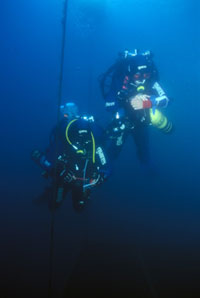 If you were to be asked what does a decompression diver look like, what would the image be in your head? Would it be a diver with doubles on their back and cylinders hanging off every available D-ring? Would it be a diver with a high capacity single on their back and a single stage bottle? Both of these images would be correct, depending on where you were and the type of diving the diver was doing, but decompression divers and their images have changed over the years.
With new technology and techniques, decompression or technical divers have been able to streamline their equipment, or in some cases change the equipment they use. The modern day technical diver can conduct a decompression dive with as little as two primary cylinders and one deco or stage cylinder. For the even more progressive diver, they have switched to a closed circuit rebreather (CCR), which allows them to conduct longer dives before they are obligated to decompress and if they are obligated to conduct decompression, depending on the unit, they can do it with the on-board gases. CCR divers will still carry an off-board cylinder as a precaution, which will allow them to make a safe ascent to the surface.
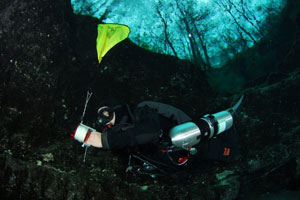
CCR’s are just one example of equipment, there is also the now more widely practiced sidemount diving. This configuration places the cylinders, and their weight, on the side of the diver and creates a more streamlined profile. Another benefit is that each cylinder, including decompression cylinders, can be unclipped and hung under the boat or left at the shoreline, reducing the load on the diver after a decompression dive.
Technology has also advanced a long ways in a couple of areas. The first is the information provided to the diver during technical course regarding their air consumption rate also referred to as surface consumption rate (SCR). This calculation allows the diver to know how much gas they will consume during the dive, allowing them to only carry what they need. A second advancement is the decompression planning software. In the early days of technical diving, divers would either decompress on air tables no matter what gas they were breathing, a very conservative practice, or decompress using very complicated pre-cut and customized decompression tables. While these tables did the job, they were still based on square profiles and most of the time did not match the actual profile of the dive, therefore requiring a lot more decompression time than was actually needed. With modern decompression software, the diver can plug in their information: max depth, time at depth, SCR, gases being used, etc and get a more realistic plan and optimize the gasses carried and time in the water. Another big benefit with planning software is it will cut contingency plans automatically.
 Some extra items the tech diver carries – we do love our gadget – are reels and lift bags; these too have come a long way. Older lift bags were the same ones used in salvage diving and were made of very heavy materials that did not pack up well. Modern ones are made of light weight materials and have no-spill bottoms so the air won’t dump when they reach the surface. Reels too have changed and become more compact since the spool was introduced. The spool is a very compact device that stores line just like a reel but does not have the bulky handles like a reel. Perhaps the piece of equipment that has changed the most is the light. Early lights were very large, even the canister versions. These lights had massive battery packs and used halogen bulbs with short burn times. Today’s lights have very small battery packs, some the size of a drink can or smaller, and the bulbs are LED, which are very efficient in power consumption.
To sum it all up, the modern day technical diver looks pretty different and has a lot of new tools at his disposal. Technical dives can now be conducted off of many boats and destinations, unlike in years past. If you have not yet started down the path into technical diving, go speak with your local TDI dive center and ask them what the next step is for you or if they have a TDI Intro to Tech course scheduled so you can ‘try before you buy’. If you are already an experienced technical diver, but have not yet tried CCR’s or sidemount – maybe now is the time for you, add a new challenge to your life and bring the excitement level back to the top. Come on…you know you want to tinker around with new stuff and fine tune it so it works perfectly for you!
Learn More: Decompression Procedures Diver >
Contact TDI SDI and ERDI
If you would like more information, please contact:
TDI
Tel: 888.778.9073 | 207.729.4201
Email: Worldhq@tdisdi.com
Web: https://www.tdisdi.com
Facebook: www.facebook.com/TechnicalDivingInt
Plaats een reactie
Deelnemen aan de discussie?Voel je vrij om een bijdrage te leveren!