
Inspecting Cylinders – Beyond the Hydro
by Don Kinney
 The primary rule affecting the inspection of high pressure cylinders in the United States is the U.S. Code of Federal Regulations (CFR) 180.205. This section refers to the hydrostatic requalification of cylinders, but also mentions that during this requalification, a visual inspection must be performed. The hydrostatic requalification may vary amongst high pressure cylinders, but a common time frame is every five years. This infers that a cylinder gets a visual inspection every five years, even though cylinders may be exposed to safety concerns countless times within a five year cycle.
Scuba diving organizations, being aware of these hazards, encourage annual visual inspections of cylinders. The National Fire Protection Association (NFPA) 1852 (7.1.2.4) requires an inspection of the cylinder at the beginning of each duty period. The Occupational and Safety Health Administration (OSHA) requires that each employer ensures that gas cylinders are safe, which can be determined by a visual inspection (1910.101(a)). None of these rules or regulations explain what to look for during these visual inspections. How can a person know what conditions are considered a safety risk?
A proper high pressure cylinder visual inspection course will show a user/inspector what conditions are acceptable and what conditions could be dangerous. The course also helps guide the user/inspector on what the next steps are to ensure safety. Each type of cylinder has unique characteristics which must be monitored to ensure its structural integrity.
 Steel cylinders are common in most industries. They include storage, fire suppression, scuba diving and compressor systems. They are susceptible to moisture from their storage environment and need to be closely monitored for issues of corrosion. These cylinders are also commonly transported from location to location and have specific safety protocols; such as attaching caps during transportation and being properly secured during use.
Composite cylinders are light weight and handle greater pressures than their solid metal counterparts, but that does not mean that they can handle the same type of environment or abuses. Users/inspectors must pay close attention to cuts and gouges, as even a small cut can render the cylinder condemnable. They also respond differently to impact damage, which might not be easy to detect without proper training. These cylinders also are highly susceptible to chemical exposure and a minor incident involving a chemical might condemn a composite cylinder.
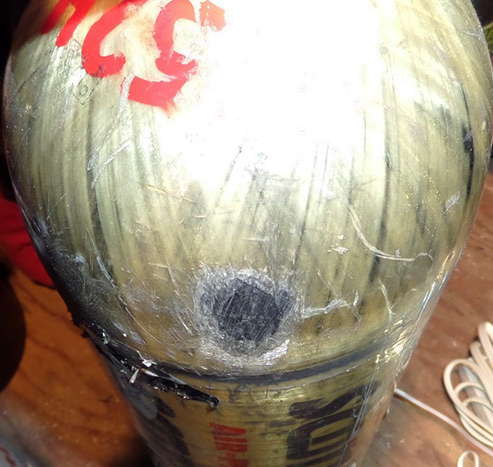 Aluminum cylinders are common in the beverage, scuba diving and medical industries. Aluminum is softer than steel, but the walls on the aluminum cylinder are manufactured with a thicker dimension than steel or composite. Even with these thicker walls, aluminum cylinders are prone to cuts and gouges which may render them unsafe . Some aluminum cylinders also require specific testing during a hydrostatic requalification and a closer inspection of the threads before continued use.
Cylinders are exposed to extreme conditions on a regular basis, thus it is recommended that they are inspected more frequently than every five years. Some of these exposures may make a cylinder unsafe long before it is due for it’s next hydrostatic requalification. A cylinder inspection course will train the user/inspector on the unique characteristics of each type of cylinder and how to recognize potential dangers before they become dangerous hazards.
Don Kinney
High Pressure Cylinder Inspecting Instructor
Zanechaj odpoveď
Chcete sa pripojiť k diskusii?Neváhajte prispieť!