
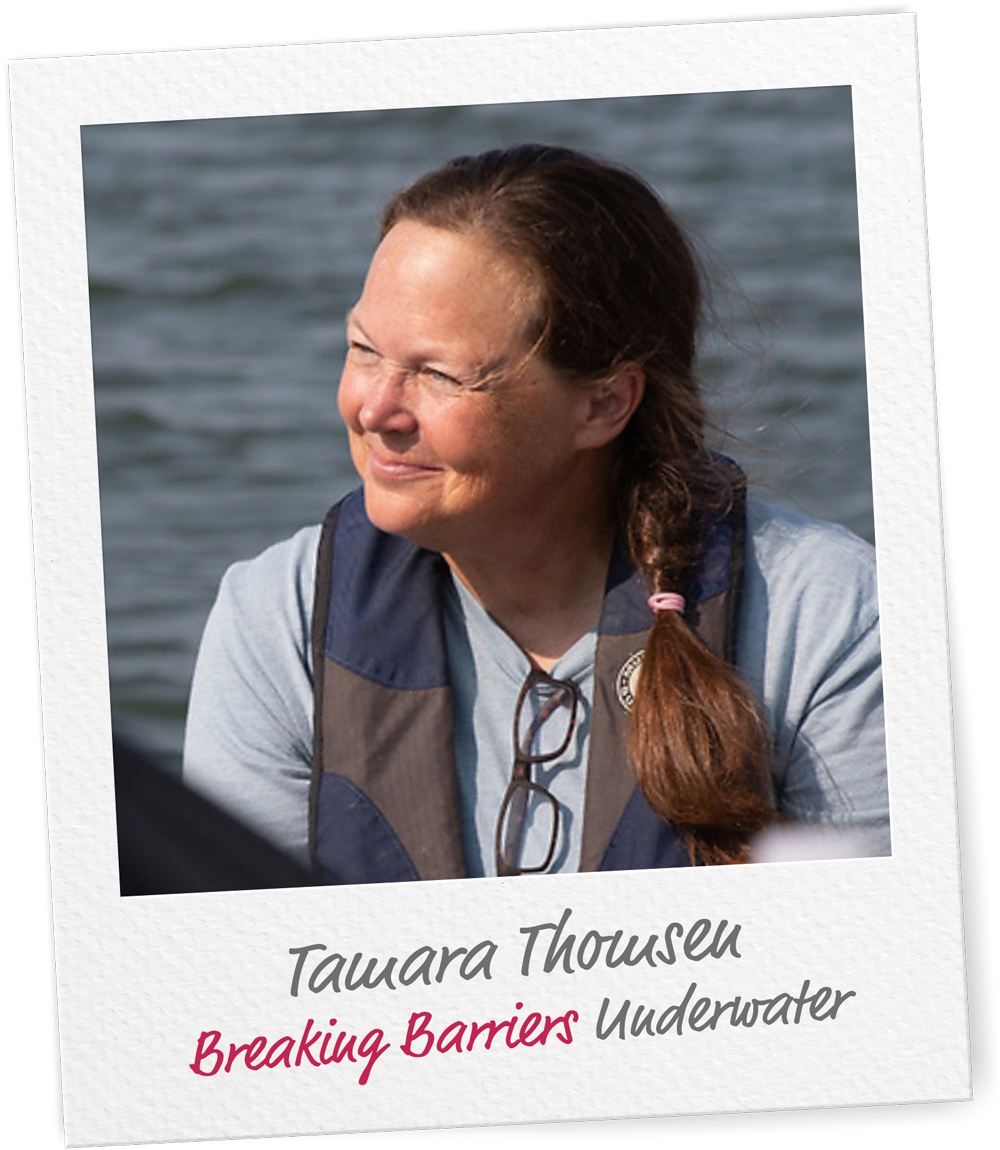
Tamara Thomsen
Women beyond diving limits
Name
Tamara Thomsen
Country of origin
USA
Where you live
Madison, Wisconsin
Dive club / dive center
Diversions Scuba
Highest diving certifications
Advanced Trimix Instructor Advanced Mixed Gas CCR Instructor, Full Cave Instructor, Rebreather Full Cave Instructor
How was your first dive?
I begged throughout high school to be allowed to take scuba lessons, but my father said next year, next year, next year and kept pushing my request down the road every time it came up. When I got to college at the University of Wisconsin-Madison, I discovered it was offered as a PE elective. I spent 5 semesters trying to get into the class and finally was able to secure a spot in the fall of 1990. My first dives were made locally in Wisconsin at Devils Lake State Park. I remember being very cold, the visibility not great and I don't recall seeing anything of much interest. Nonetheless, I loved the comradery and the interesting people that I met through diving, and I immediately signed up for additional courses at my local dive center.
What made you transition from sport diving to technical diving?
I got my divemaster, taught scuba and worked part time at a local dive shop through graduate school to make a little extra money. In the fall of 1993, I was sent as a trip leader on a shop trip to Akumal, Mexico. While we were there, one of the resort's small boats broke down and I gave up my seat on a working boat to make it easier for the customers to dive. While I was trying to figure out what to do with my remaining time in Mexico, I noticed the shop was offering cave diving courses and signed up for cavern training. I loved the challenge and wanted more. When I got back to the US, I learned that I could continue my training in Florida, and when I had saved up enough money (several months later), I borrowed a set of doubles and enrolled in Intro to Cave. The instructor combined it with a Nitrox diving course which was super exotic at the time.
What type of technical diving do you practice.
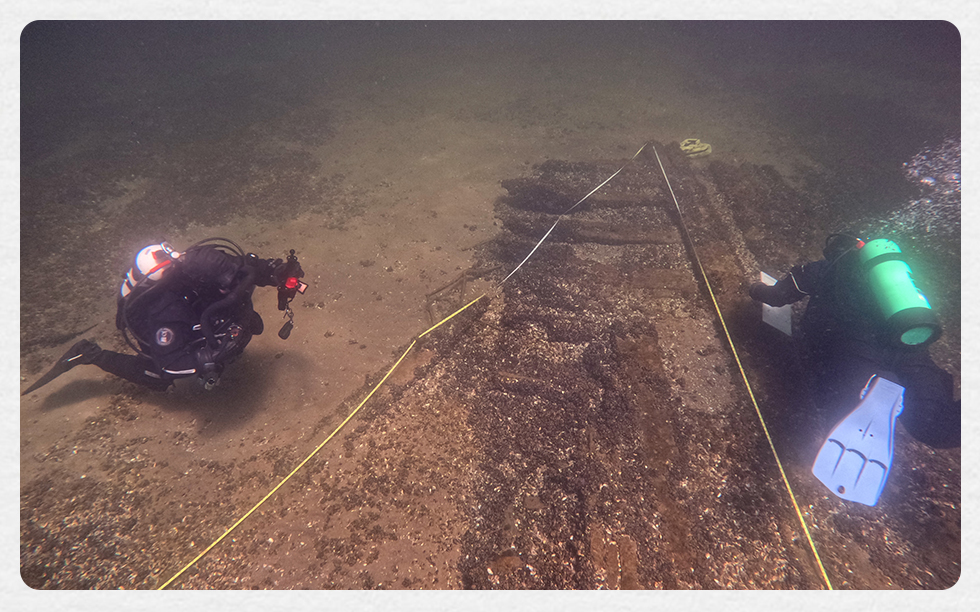
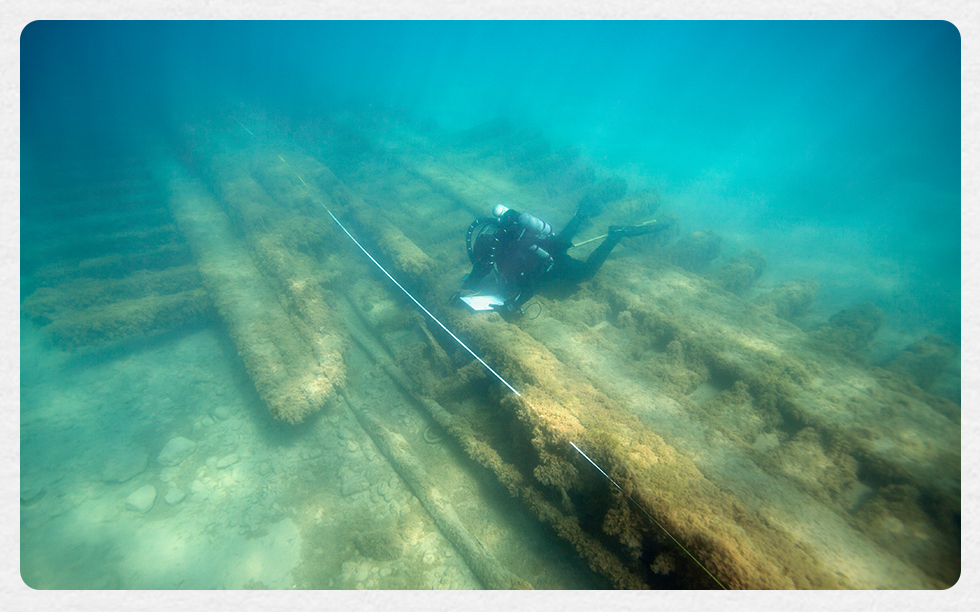
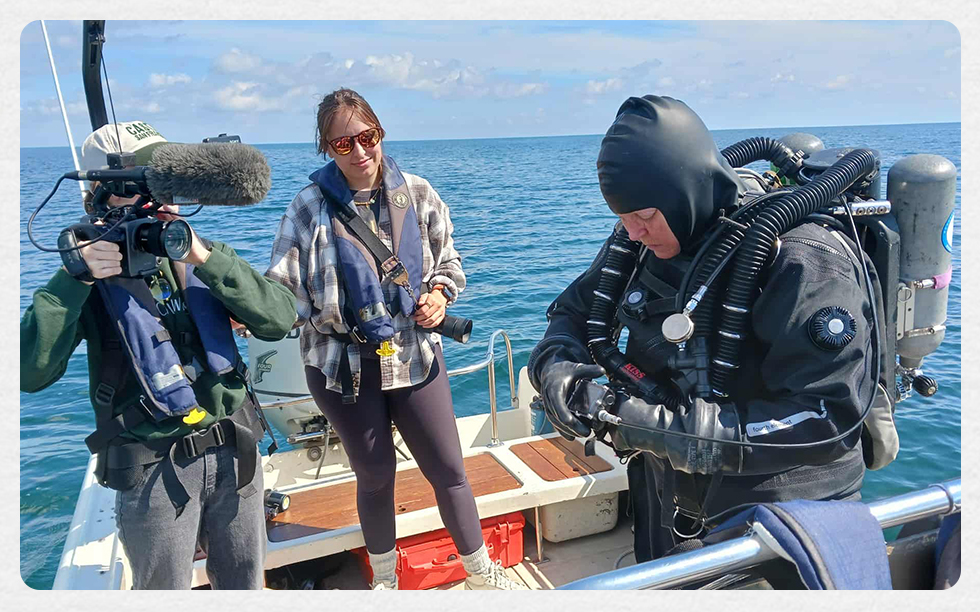
I work as an underwater archaeologist for the State of Wisconsin, and I use technical diving as a tool for my job. I use rebreathers for most wreck dives – deep or shallow, because we have a small boat and rebreathers take up less space and weigh less comparatively with equipment needed for up to 4 hours underwater. I also use mixed gases regularly for deep wreck dives. We dive wrecks as deep as 330 feet of water – granted, we also have access to ROVs and sometimes it's advantageous to forgo the risk of diving deep altogether and just use robotics to collect the data that we need. We also document and record historical, inundated mine sites – and I can add in my skills as a cave diver for this.
The type of technical diving that I enjoy the most is probably rebreather diving. I very rarely will dive on open circuit, and I use rebreathers for shallow, deep, mixed gas, cave and wreck diving. What draws me to it, is the simplicity of a manually controlled unit. I can spend up to 4 hours with minimal gas use which will allow me to get my job done. The bonus is that the gas is warm and moist.
What do you consider when looking for technical diving training?
Number one thing I look for is whether the instructor dives this way for recreation or only has acquired their ticket for making money. I want to learn from someone with real experience that also has a passion for diving recreationally at that level and a resumé behind the skills that they are teaching me.
Besides formal training, what other skills do you think are essential for technical diving?
Nothing can replace time in the water. The more dives that you do, the more comfortable you will become. Allow yourself the time to practice, adjust gear and to learn organically outside of training.
What challenges have you faced as a woman in technical diving?
The most challenging circumstance I've experienced involved earning my TDI Advanced Trimix Instructor rating:
As I completed the last bit of co-teaching for my Advanced Trimix Instructor course, the IT informed me that he quit TDI, moved all his instructor ratings to a different agency and was going to process my card through the other agency. Months on, no card came. The IT directed me to call that agency’s headquarters. I was put through to the Training Director and I explained the situation. He may have thought he put me on hold, but he did not. Having never met me, he began speaking with another person in the office loudly and crudely about me. He accused me of having sex with my IT to “earn” my certification. They went on to joke about the quantity of sex that would have been required and hypothesized what sorts of sex acts would be needed to get that higher rating. I never experienced someone talking about me in such a humiliating and grotesque manner, and it affected me profoundly. When the Director returned to the line, I was shaking like a leaf but through my tears, I let him know that I was not on hold and that I overheard everything. He never apologized. I also never received my card. I ended up taking the course over again with a different TDI IT more than a year later. It took me a while to decide if it was worth going through the process all over again and if I was mentally ready for this to happen to me again. It also took time to earn enough money to pay for a second course, but I did not what to let this misogyny set me back.
Why do you think technical diving is still a male-dominated sport?
Why? Because we don't do enough to stop the culture of bullying that continues to be allowed in technical diving and frankly needs to be stopped. Diving is supposed to fun at all levels, and although you need to be serious when correcting issues when training students, technical diving specifically is fraught with meanness and hostile criticism. Not everyone is a natural at this faction of the sport with complex equipment and strict procedures – but how much effort does a little kindness and mentoring take? I have mentored at least a dozen women that started out with male instructors, and I became their last hope instead of giving up on their dream. What a shame.
What message or advice would you give to other women considering technical diving?
So, for my advice – don't give up on your dreams. If some aspect of the sport interests you, learn about it and put in the time to excel at it. Learn to technical dive but also practice those skills – there's more to it than just getting your certification. You need to be comfortable underwater and in control of your life support to the extent that you can notice problems before they accelerate and in a flash be able to shift and respond to issues that may occur as second nature. My background in the sciences, and participation in underwater projects in diverse fields of study, as well as the skills that I developed early in diving, specifically technical diving using rebreathers and mixed gases, have put me a leg up and these skills and experiences have allowed me opportunities that were not available to others.
What has been your most memorable dive so far?
I've dived on a lot of sites throughout my career, but the most meaningful has probably been my recent discoveries of the Lake Mendota canoe caching site. The sixteen canoes were found during recreational dives to no more than 27 feet of water in the lake right behind my house, between 2021 and the spring of 2025. The canoes range in age from 900 – 5200 years old. The interactions with our tribal partners have been powerful in that the discoveries have allowed their community's history to be told through these dugouts.
What are your next goals in technical diving?
There are a couple new technological advances in rebreathers coming soon to the market that I have been waiting for. I would like to experience some of these. I try to take a dive course every year or so, and I think that I may soon have to buy a new rebreather and start that training cycle over again!
Do you have a dive buddy you trust completely?
Yes – I have been fortunate to have had a couple of great divers as friends and buddies with over the years.
What qualities do you look for in a great technical dive buddy?
This isn't for technical diving alone, but: Someone who is responsive and not reactive to issues as they develop – where response to issues should be well-rehearsed and come as second nature. Someone that is practiced and comfortable in the water and equally comfortable with the skills at their level. Someone that is a good communicator – the best buddies will signal and communicate issues before they become problems. Someone that is calm on the surface and underwater, and someone that isn't doing a particular dive only to brag about it or feed their ego.
 https://www.tdisdi.com/wp-content/uploads/2026/01/Diving-St.-Eustatius.jpg
628
1200
Joan Solé García
https://www.tdisdi.com/wp-content/uploads/2021/10/header-web-live.png
Joan Solé García2026-01-29 03:00:232026-01-29 03:00:23Diving St. Eustatius
https://www.tdisdi.com/wp-content/uploads/2026/01/Diving-St.-Eustatius.jpg
628
1200
Joan Solé García
https://www.tdisdi.com/wp-content/uploads/2021/10/header-web-live.png
Joan Solé García2026-01-29 03:00:232026-01-29 03:00:23Diving St. Eustatius https://www.tdisdi.com/wp-content/uploads/2026/01/Best-Days-to-Dive.jpg
628
1200
Joan Solé García
https://www.tdisdi.com/wp-content/uploads/2021/10/header-web-live.png
Joan Solé García2026-01-28 04:54:352026-01-28 04:54:35The Best Days to Dive
https://www.tdisdi.com/wp-content/uploads/2026/01/Best-Days-to-Dive.jpg
628
1200
Joan Solé García
https://www.tdisdi.com/wp-content/uploads/2021/10/header-web-live.png
Joan Solé García2026-01-28 04:54:352026-01-28 04:54:35The Best Days to Dive https://www.tdisdi.com/wp-content/uploads/2026/01/Looking-Beyond-the-Dive-Show-Floor.jpg
628
1200
Joan Solé García
https://www.tdisdi.com/wp-content/uploads/2021/10/header-web-live.png
Joan Solé García2026-01-26 05:20:292026-01-26 16:49:00Looking Beyond the Dive Show Floor
https://www.tdisdi.com/wp-content/uploads/2026/01/Looking-Beyond-the-Dive-Show-Floor.jpg
628
1200
Joan Solé García
https://www.tdisdi.com/wp-content/uploads/2021/10/header-web-live.png
Joan Solé García2026-01-26 05:20:292026-01-26 16:49:00Looking Beyond the Dive Show Floor https://www.tdisdi.com/wp-content/uploads/2026/01/ANTARCTIQUE.jpg
628
1200
Joan Solé García
https://www.tdisdi.com/wp-content/uploads/2021/10/header-web-live.png
Joan Solé García2026-01-22 06:32:542026-01-22 06:32:54ANTARCTICA
https://www.tdisdi.com/wp-content/uploads/2026/01/ANTARCTIQUE.jpg
628
1200
Joan Solé García
https://www.tdisdi.com/wp-content/uploads/2021/10/header-web-live.png
Joan Solé García2026-01-22 06:32:542026-01-22 06:32:54ANTARCTICA https://www.tdisdi.com/wp-content/uploads/2026/01/women-idc.jpg
628
1200
Joan Solé García
https://www.tdisdi.com/wp-content/uploads/2021/10/header-web-live.png
Joan Solé García2026-01-21 04:55:202026-01-22 08:16:54Women's IDC – May 23-31, 2026
https://www.tdisdi.com/wp-content/uploads/2026/01/women-idc.jpg
628
1200
Joan Solé García
https://www.tdisdi.com/wp-content/uploads/2021/10/header-web-live.png
Joan Solé García2026-01-21 04:55:202026-01-22 08:16:54Women's IDC – May 23-31, 2026 https://www.tdisdi.com/wp-content/uploads/2026/01/women-who-tech-dive-tamara-thomsen.jpg
628
1200
Joan Solé García
https://www.tdisdi.com/wp-content/uploads/2021/10/header-web-live.png
Joan Solé García2026-01-19 04:46:442026-01-19 04:46:44Women Who Tech Dive Tamara Thomsen
https://www.tdisdi.com/wp-content/uploads/2026/01/women-who-tech-dive-tamara-thomsen.jpg
628
1200
Joan Solé García
https://www.tdisdi.com/wp-content/uploads/2021/10/header-web-live.png
Joan Solé García2026-01-19 04:46:442026-01-19 04:46:44Women Who Tech Dive Tamara Thomsen https://www.tdisdi.com/wp-content/uploads/2026/01/DI-Scubility-Program.jpg
628
1200
Joan Solé García
https://www.tdisdi.com/wp-content/uploads/2021/10/header-web-live.png
Joan Solé García2026-01-15 01:42:552026-01-15 01:42:55SDI Scubility Program
https://www.tdisdi.com/wp-content/uploads/2026/01/DI-Scubility-Program.jpg
628
1200
Joan Solé García
https://www.tdisdi.com/wp-content/uploads/2021/10/header-web-live.png
Joan Solé García2026-01-15 01:42:552026-01-15 01:42:55SDI Scubility Program https://www.tdisdi.com/wp-content/uploads/2026/01/Diving-for-Mental-Health.jpg
628
1200
Joan Solé García
https://www.tdisdi.com/wp-content/uploads/2021/10/header-web-live.png
Joan Solé García2026-01-14 04:18:042026-01-14 04:18:04Diving for Mental Health
https://www.tdisdi.com/wp-content/uploads/2026/01/Diving-for-Mental-Health.jpg
628
1200
Joan Solé García
https://www.tdisdi.com/wp-content/uploads/2021/10/header-web-live.png
Joan Solé García2026-01-14 04:18:042026-01-14 04:18:04Diving for Mental Health
Leave a Reply
Want to join the discussion?Feel free to contribute!