
DEMA Recap
how DEEP is changing 21st century exploration
Kirk Krack of DEEP Research Inc. provides a detailed update on the progress of the organization’s ambitious objective to design, build, and deploy subsea habitats around the world. This year marks a major milestone, as DEEP prepares for its most exciting advancement to date with the launch of the Vanguard habitat in November. The project represents a significant step forward in redefining how humans live, work, and conduct research beneath the ocean’s surface.
With a vision centered on developing 21st-century subsea habitats and the advanced technologies required to support them, Kirk guides the audience through the history of underwater habitats while drawing clear parallels to the evolution of scientific saturation diving. He connects past innovations to present-day capabilities, highlighting how decades of technical progress have made long-term human presence underwater not only possible, but practical. This historical context leads to an update on the DEEP Saturation Training Facility, which plays a critical role in preparing divers and scientists for extended missions in extreme subsea environments.
DEEP’s work actively supports a wide range of scientific and industrial applications, including mesophotic zone coral research, bottom trawling restoration, bioprospecting, and the monitoring and maintenance of critical underwater infrastructure. Across all these efforts, the guiding principle remains consistent. Keeping the human in the loop is central to DEEP’s core mission, ensuring that direct human observation, decision-making, and adaptability remain essential components of subsea exploration and problem solving.
 https://www.tdisdi.com/wp-content/uploads/2025/12/Connect-Profit-Repeat.jpg
628
1200
Joan Solé García
https://www.tdisdi.com/wp-content/uploads/2021/10/header-web-live.png
Joan Solé García2025-12-29 06:48:062025-12-29 06:48:06Connect Profit Repeat
https://www.tdisdi.com/wp-content/uploads/2025/12/Connect-Profit-Repeat.jpg
628
1200
Joan Solé García
https://www.tdisdi.com/wp-content/uploads/2021/10/header-web-live.png
Joan Solé García2025-12-29 06:48:062025-12-29 06:48:06Connect Profit Repeat https://www.tdisdi.com/wp-content/uploads/2025/12/Teaching-Mindfully.jpg
628
1200
Joan Solé García
https://www.tdisdi.com/wp-content/uploads/2021/10/header-web-live.png
Joan Solé García2025-12-25 05:36:232025-12-25 05:38:44Teaching Mindfully
https://www.tdisdi.com/wp-content/uploads/2025/12/Teaching-Mindfully.jpg
628
1200
Joan Solé García
https://www.tdisdi.com/wp-content/uploads/2021/10/header-web-live.png
Joan Solé García2025-12-25 05:36:232025-12-25 05:38:44Teaching Mindfully https://www.tdisdi.com/wp-content/uploads/2025/12/E-mail-Marketing-Gold.jpg
628
1200
Joan Solé García
https://www.tdisdi.com/wp-content/uploads/2021/10/header-web-live.png
Joan Solé García2025-12-24 05:33:572025-12-24 05:33:57E-mail Marketing Gold
https://www.tdisdi.com/wp-content/uploads/2025/12/E-mail-Marketing-Gold.jpg
628
1200
Joan Solé García
https://www.tdisdi.com/wp-content/uploads/2021/10/header-web-live.png
Joan Solé García2025-12-24 05:33:572025-12-24 05:33:57E-mail Marketing Gold https://www.tdisdi.com/wp-content/uploads/2025/12/how-DEEP-is-changing-21st-century-exploration.jpg
628
1200
Joan Solé García
https://www.tdisdi.com/wp-content/uploads/2021/10/header-web-live.png
Joan Solé García2025-12-22 05:49:492025-12-22 05:49:49DEEP is changing 21st century exploration
https://www.tdisdi.com/wp-content/uploads/2025/12/how-DEEP-is-changing-21st-century-exploration.jpg
628
1200
Joan Solé García
https://www.tdisdi.com/wp-content/uploads/2021/10/header-web-live.png
Joan Solé García2025-12-22 05:49:492025-12-22 05:49:49DEEP is changing 21st century exploration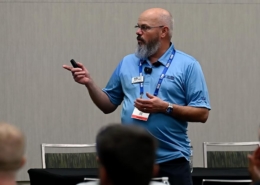 https://www.tdisdi.com/wp-content/uploads/2025/12/Risk-Management-for-Dive-Professionals.jpg
628
1200
Joan Solé García
https://www.tdisdi.com/wp-content/uploads/2021/10/header-web-live.png
Joan Solé García2025-12-18 06:05:092025-12-18 06:05:09Risk Management for Dive Professionals
https://www.tdisdi.com/wp-content/uploads/2025/12/Risk-Management-for-Dive-Professionals.jpg
628
1200
Joan Solé García
https://www.tdisdi.com/wp-content/uploads/2021/10/header-web-live.png
Joan Solé García2025-12-18 06:05:092025-12-18 06:05:09Risk Management for Dive Professionals https://www.tdisdi.com/wp-content/uploads/2025/12/Is-Your-Website-All-About-You.jpg
628
1200
Joan Solé García
https://www.tdisdi.com/wp-content/uploads/2021/10/header-web-live.png
Joan Solé García2025-12-17 03:32:012025-12-17 03:32:01Is Your Website All About You
https://www.tdisdi.com/wp-content/uploads/2025/12/Is-Your-Website-All-About-You.jpg
628
1200
Joan Solé García
https://www.tdisdi.com/wp-content/uploads/2021/10/header-web-live.png
Joan Solé García2025-12-17 03:32:012025-12-17 03:32:01Is Your Website All About You https://www.tdisdi.com/wp-content/uploads/2025/12/how-big-is-tech-diving.jpg
628
1200
Joan Solé García
https://www.tdisdi.com/wp-content/uploads/2021/10/header-web-live.png
Joan Solé García2025-12-15 05:23:132025-12-17 14:29:20技術潛水的規模有多大?
https://www.tdisdi.com/wp-content/uploads/2025/12/how-big-is-tech-diving.jpg
628
1200
Joan Solé García
https://www.tdisdi.com/wp-content/uploads/2021/10/header-web-live.png
Joan Solé García2025-12-15 05:23:132025-12-17 14:29:20技術潛水的規模有多大? https://www.tdisdi.com/wp-content/uploads/2025/12/standards-in-the-RSTC.jpg
628
1200
Joan Solé García
https://www.tdisdi.com/wp-content/uploads/2021/10/header-web-live.png
Joan Solé García2025-12-11 04:54:372025-12-17 13:10:57RSTC 的標準
https://www.tdisdi.com/wp-content/uploads/2025/12/standards-in-the-RSTC.jpg
628
1200
Joan Solé García
https://www.tdisdi.com/wp-content/uploads/2021/10/header-web-live.png
Joan Solé García2025-12-11 04:54:372025-12-17 13:10:57RSTC 的標準
留下回覆
想加入討論?隨時歡迎參與討論!