
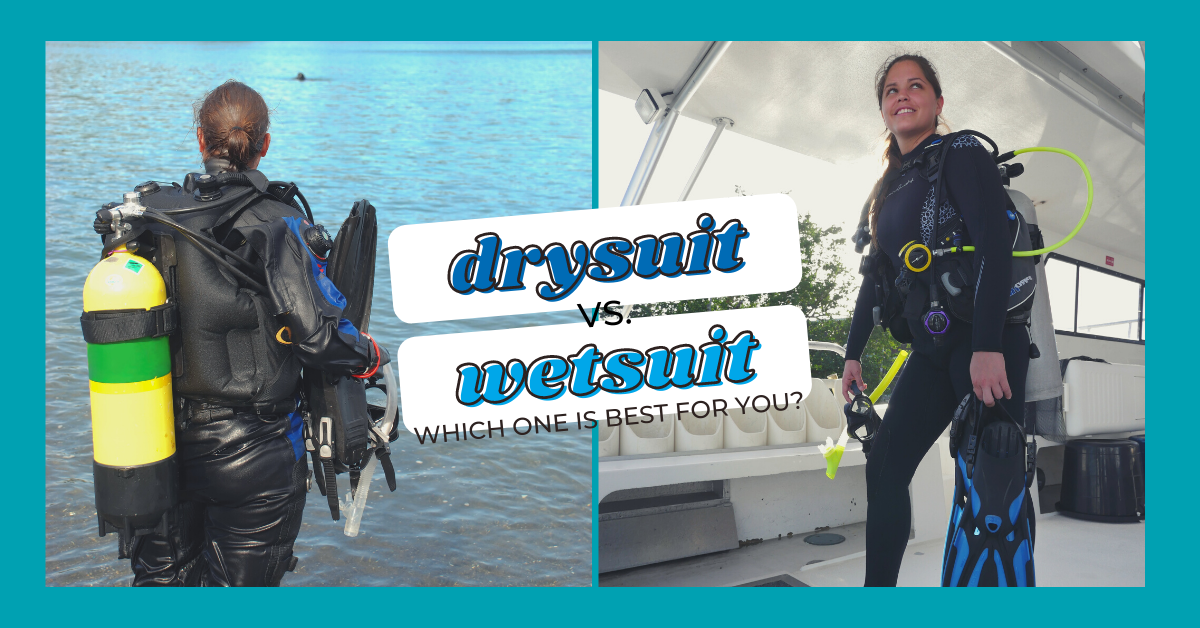
Drysuit vs Wetsuit
 Nothing is worse than going on a scuba vacation and being cold during your dive. Actually, there is – getting on the 2nd or 3rd dive and being cold before the dive even begins. And this is how the debate begins; Dry Suit vs Wet Suit.
There are several advantages to the wetsuit. It is rather light, not extremely expensive, requires little care, it is easy to get in and out and has few maintenance issues, aside from a rinse here and there. Once patch-up work is needed, a diver will usually go out and get another one from their local dive center or repair it with rubber glue.
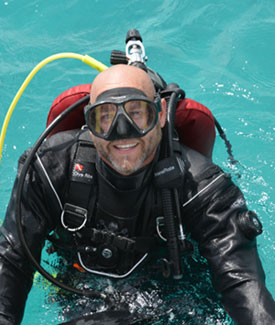
So why are so many people moving to the dry suit? It is heavier, costs a heck of a lot more, and it is a pain at times to maintain and fix and sometimes, you can’t even get in a dry suit without the help of your buddy. Why go through all the extra hassles to dive in a dry suit? One word… comfort.
Though you can get a decent wetsuit for between $150.00 to $250, depending on the thickness, a good dry suit can easily cost you over a $2000+. Depending on how many dives you do a year and where you go, it may not be worth getting a dry suit – but consider this; with a dry suit, you are now able to dive in many more places that have spectacular diving and you can probably do so year round, rather than just 2 or 3 months out of the year.
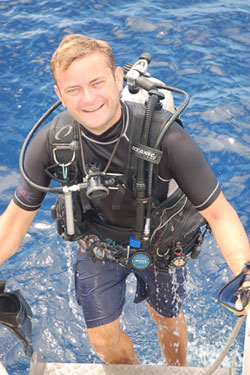 The “Dry Suit vs Wet Suit” debate is one that has been going on forever. In the end, it is a matter of comfort more than anything else. Aside from what has already been mentioned, people who prefer the wetsuit may also pick a wetsuit out of comfort. They streamline better and almost feel like they are part of your body, without having to worry about its bulkiness and air in the suit and purging it.
Sure, this is only a matter of opinion and the type of warm water dives that so many divers do nowadays really only require a 3mm suit – and that is fine. But what about all those other dive sites were the water is below 80F?
The only winner out of a debate like this is the end user: you. What makes you comfortable and how much is that comfort worth to you? Where do you dive and how often? You can settle this debate by going down to your local dive center and finding out when their demo day at the quarry or the beach will happen and try out the different type of suits available. Dry suits will also require additional training, but most dive centers that offer dry suits for sale are sure to have the SDI Dry Suit course available as well.

 https://www.tdisdi.com/wp-content/uploads/2026/01/Diving-St.-Eustatius.jpg
628
1200
Joan Solé García
https://www.tdisdi.com/wp-content/uploads/2021/10/header-web-live.png
Joan Solé García2026-01-29 03:00:232026-01-29 03:00:23Diving St. Eustatius
https://www.tdisdi.com/wp-content/uploads/2026/01/Diving-St.-Eustatius.jpg
628
1200
Joan Solé García
https://www.tdisdi.com/wp-content/uploads/2021/10/header-web-live.png
Joan Solé García2026-01-29 03:00:232026-01-29 03:00:23Diving St. Eustatius https://www.tdisdi.com/wp-content/uploads/2026/01/Best-Days-to-Dive.jpg
628
1200
Joan Solé García
https://www.tdisdi.com/wp-content/uploads/2021/10/header-web-live.png
Joan Solé García2026-01-28 04:54:352026-01-28 04:54:35The Best Days to Dive
https://www.tdisdi.com/wp-content/uploads/2026/01/Best-Days-to-Dive.jpg
628
1200
Joan Solé García
https://www.tdisdi.com/wp-content/uploads/2021/10/header-web-live.png
Joan Solé García2026-01-28 04:54:352026-01-28 04:54:35The Best Days to Dive https://www.tdisdi.com/wp-content/uploads/2026/01/Looking-Beyond-the-Dive-Show-Floor.jpg
628
1200
Joan Solé García
https://www.tdisdi.com/wp-content/uploads/2021/10/header-web-live.png
Joan Solé García2026-01-26 05:20:292026-01-26 16:49:00Looking Beyond the Dive Show Floor
https://www.tdisdi.com/wp-content/uploads/2026/01/Looking-Beyond-the-Dive-Show-Floor.jpg
628
1200
Joan Solé García
https://www.tdisdi.com/wp-content/uploads/2021/10/header-web-live.png
Joan Solé García2026-01-26 05:20:292026-01-26 16:49:00Looking Beyond the Dive Show Floor https://www.tdisdi.com/wp-content/uploads/2026/01/ANTARCTIQUE.jpg
628
1200
Joan Solé García
https://www.tdisdi.com/wp-content/uploads/2021/10/header-web-live.png
Joan Solé García2026-01-22 06:32:542026-01-22 06:32:54ANTARCTICA
https://www.tdisdi.com/wp-content/uploads/2026/01/ANTARCTIQUE.jpg
628
1200
Joan Solé García
https://www.tdisdi.com/wp-content/uploads/2021/10/header-web-live.png
Joan Solé García2026-01-22 06:32:542026-01-22 06:32:54ANTARCTICA https://www.tdisdi.com/wp-content/uploads/2026/01/women-who-tech-dive-tamara-thomsen.jpg
628
1200
Joan Solé García
https://www.tdisdi.com/wp-content/uploads/2021/10/header-web-live.png
Joan Solé García2026-01-19 04:46:442026-01-19 04:46:44Women Who Tech Dive Tamara Thomsen
https://www.tdisdi.com/wp-content/uploads/2026/01/women-who-tech-dive-tamara-thomsen.jpg
628
1200
Joan Solé García
https://www.tdisdi.com/wp-content/uploads/2021/10/header-web-live.png
Joan Solé García2026-01-19 04:46:442026-01-19 04:46:44Women Who Tech Dive Tamara Thomsen https://www.tdisdi.com/wp-content/uploads/2026/01/DI-Scubility-Program.jpg
628
1200
Joan Solé García
https://www.tdisdi.com/wp-content/uploads/2021/10/header-web-live.png
Joan Solé García2026-01-15 01:42:552026-01-29 22:05:12Programa SDI Scubility
https://www.tdisdi.com/wp-content/uploads/2026/01/DI-Scubility-Program.jpg
628
1200
Joan Solé García
https://www.tdisdi.com/wp-content/uploads/2021/10/header-web-live.png
Joan Solé García2026-01-15 01:42:552026-01-29 22:05:12Programa SDI Scubility https://www.tdisdi.com/wp-content/uploads/2026/01/Diving-for-Mental-Health.jpg
628
1200
Joan Solé García
https://www.tdisdi.com/wp-content/uploads/2021/10/header-web-live.png
Joan Solé García2026-01-14 04:18:042026-01-29 19:19:11Mergulho para a saúde mental
https://www.tdisdi.com/wp-content/uploads/2026/01/Diving-for-Mental-Health.jpg
628
1200
Joan Solé García
https://www.tdisdi.com/wp-content/uploads/2021/10/header-web-live.png
Joan Solé García2026-01-14 04:18:042026-01-29 19:19:11Mergulho para a saúde mental https://www.tdisdi.com/wp-content/uploads/2026/01/Considerations-for-Scubility.jpg
628
1200
Joan Solé García
https://www.tdisdi.com/wp-content/uploads/2021/10/header-web-live.png
Joan Solé García2026-01-12 05:58:402026-01-29 20:31:42Considerações sobre a Escavabilidade
https://www.tdisdi.com/wp-content/uploads/2026/01/Considerations-for-Scubility.jpg
628
1200
Joan Solé García
https://www.tdisdi.com/wp-content/uploads/2021/10/header-web-live.png
Joan Solé García2026-01-12 05:58:402026-01-29 20:31:42Considerações sobre a Escavabilidade https://www.tdisdi.com/wp-content/uploads/2026/01/Mentorship-in-Technical-Diving.jpg
628
1200
Joan Solé García
https://www.tdisdi.com/wp-content/uploads/2021/10/header-web-live.png
Joan Solé García2026-01-08 04:31:582026-01-19 15:37:20Mentoria em Mergulho Técnico
https://www.tdisdi.com/wp-content/uploads/2026/01/Mentorship-in-Technical-Diving.jpg
628
1200
Joan Solé García
https://www.tdisdi.com/wp-content/uploads/2021/10/header-web-live.png
Joan Solé García2026-01-08 04:31:582026-01-19 15:37:20Mentoria em Mergulho Técnico
Deixe uma resposta
Want to join the discussion?Feel free to contribute!