
Diving for Mental Health
How Scuba Can Help First Responders and Others Find Calm
Article by Sebastien Wilem
Introduction: Discovering a New World
I was born in 1979, and I discovered scuba diving in 1997. At 18, I was drawn by curiosity and the promise of adventure, but I could never have imagined how profoundly this world beneath the surface would change my life. I was just beginning my career as a volunteer firefighter and EMT, stepping into situations that most people could only imagine in nightmares. Emergency calls, fires, accidents, they all became a part of my everyday life. And yet, in the chaos, I found an unusual refuge: scuba diving.
From my first breath underwater, I felt a calm unlike anything I had experienced on land. The silence, the gentle pressure of the water, the way my body floated effortlessly — it was liberating. It was as if the world above had melted away, leaving only me, my breath, and the vast, vibrant ocean.
As I continued diving over the years, I realized it wasn’t just a personal escape. I began noticing the effect it had on my colleagues, firefighters, EMTs, and police officers, who had endured trauma and carried invisible burdens. Post-Traumatic Stress Disorder (PTSD), anxiety, hypervigilance: these were phrases and words that defined their daily struggles, sometimes silently. I started bringing them into the underwater world, watching as their tense shoulders softened, their racing thoughts slowed, and their eyes lit with the curiosity and wonder I had first felt.
Scuba diving is not therapy, nor a cure for trauma. But it offers something perhaps even more valuable: a chance to breathe, to focus, and to reclaim a sense of control that trauma often robs from us. This is the story of how diving became a tool for mental health — for me, for my colleagues, and for anyone willing to take the plunge.
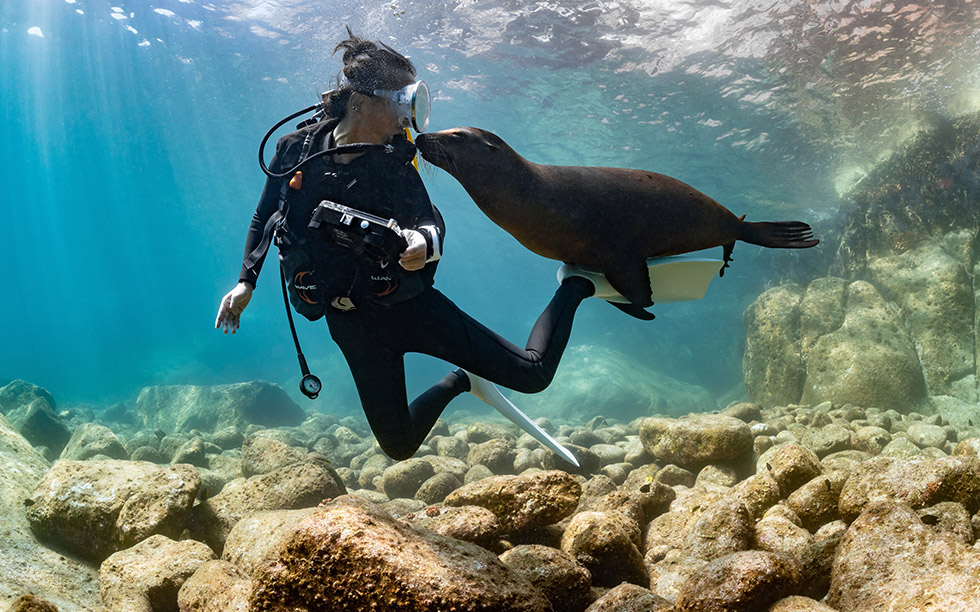
1- The Underwater World as a Sanctuary
There’s something almost magical about being submerged. The first time you slip beneath the surface, the noise of the world fades. Sirens, alarms, chatter; they all are replaced by silence and the soft, rhythmic sound of your own breathing. For someone like me, accustomed to chaos, this silence was nothing short of transformative.
Silence That Speaks
Silence underwater is not empty. It speaks. It allows your mind to wander, reflect, and simply exist without pressure. It’s a rare mental space where past trauma and future worries are suspended. For first responders, whose daily lives are defined by rapid decisions and constant alertness, this silence offers a kind of relief that is almost sacred. The ocean has its own rhythm, and when you align with it, your mind begins to synchronize as well.
Weightless Freedom
Neutral buoyancy, the art of floating effortlessly, is more than a skill; it is liberation. There’s no gravity pressing down, no tension in your shoulders, no fear in your chest. In the water, I have felt moments of true weightlessness, both physically and emotionally. Colleagues struggling with PTSD often describe a similar sensation: the burden of trauma lifts, if only for a brief, precious moment. Floating becomes a metaphor for release, a moment where the world feels manageable again.
Breathing as a Lifeline
Every breath underwater is deliberate, controlled. It’s the opposite of the fast, shallow breathing that accompanies stress and anxiety. For those with PTSD, this kind of breathing can be profoundly grounding. It mirrors techniques used in therapy: inhale deeply, exhale slowly, return to the present. Underwater, this process is automatic. The tank provides air, but it also provides calm. Breathing becomes not just survival, but a form of meditation.
Connection with Nature
The ocean is alive with color, movement and life. Fish dart through coral gardens, rays glide across sandy floors, and light filters through the water in shifting patterns. Experiencing this beauty is awe-inspiring. Nature has a way of soothing the mind, lowering stress hormones, and reminding us that life continues, in all its complexity and wonder. For someone burdened by trauma, this reconnection with beauty can feel like a small miracle.
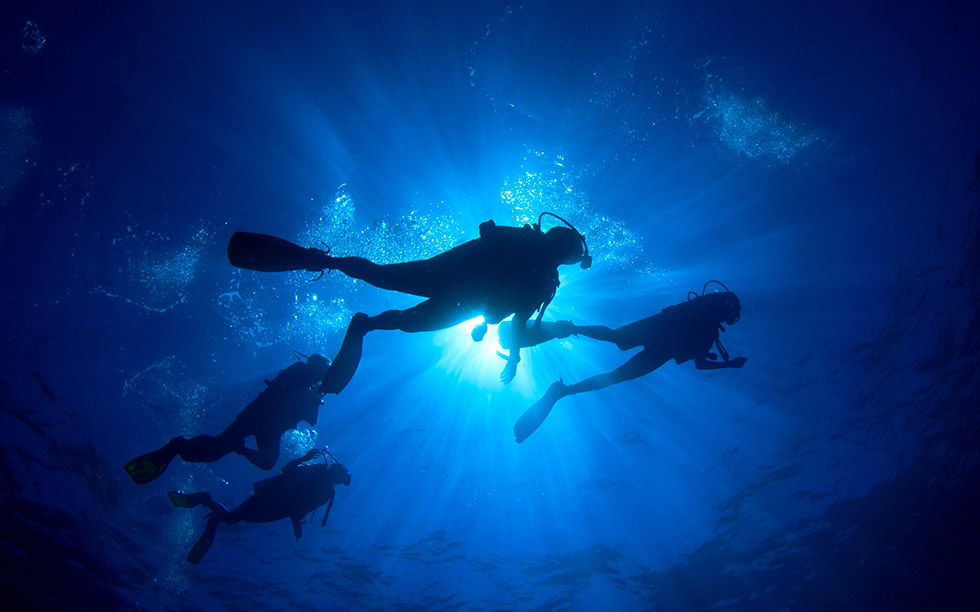
2- Diving as an Ally for First Responders
Having served as a firefighter, EMT, and Federal Police officer, I know firsthand how trauma affects those who witness the worst of life. PTSD is common, yet invisible. It manifests in sleepless nights, heightened anxiety, irritability, and a sense of detachment. Diving, I discovered, could help mitigate some of these effects.
A Predictable Environment
In diving, every action is deliberate: plan the dive, check your equipment, monitor your air supply, communicate with your buddy. This structured approach is reassuring to those accustomed to unpredictable emergencies. The ocean becomes a space where order exists, and for the first time in a long time, the mind can relax into routine and precision.
Safety and Control
Underwater, danger exists, but it is controlled. Every step is governed by training and procedure. For PTSD sufferers, the ability to anticipate and control one’s environment is empowering. Skills, drills, and teamwork restore confidence and reduce feelings of helplessness that trauma can amplify.
Mastery and Competence
Trauma often leaves people feeling powerless. Diving provides a counterbalance: you learn to manage your buoyancy, navigate underwater, and handle equipment. Every skill mastered is a small victory. Each dive builds competence, and with it, a sense of self-efficacy that trauma erodes.
Camaraderie and Trust
Diving is rarely solitary. Buddy systems and team dives foster trust, reliance, and mutual support. First responders thrive on teamwork, yet trauma can isolate. The dive community provides a bridge back to connection, a place where support is immediate and visible.
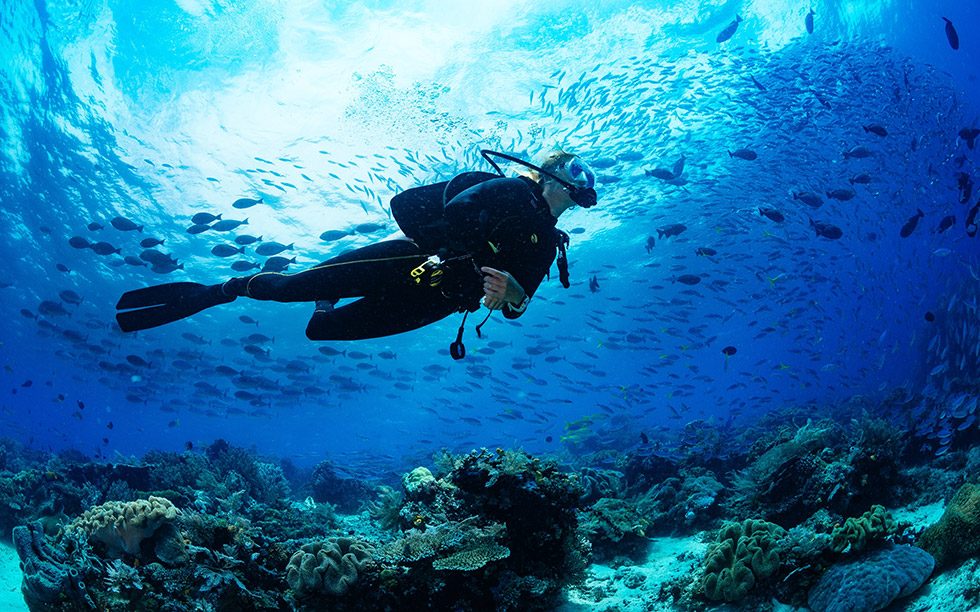
3- The Psychological Benefits of Diving
Scuba diving offers experiences that mirror key therapeutic principles for mental health:
- Presence and Grounding: Focus shifts entirely to the present moment; breathing, movement, observing the environment.
- Regulated Arousal: The physical demands of diving, coupled with controlled breathing, help reduce hyperarousal.
- Reconnection with Pleasure: Witnessing marine life and exploring underwater landscapes triggers positive emotions.
- Mental Space: The immersion provides a rare break from intrusive thoughts, giving the mind room to rest and heal.
Through personal experience and observation of colleagues, I’ve seen these benefits repeatedly. Individuals who struggled with hypervigilance or constant tension found relief beneath the waves. They learned to trust themselves again, to breathe fully, and to reconnect with joy.
4- Introducing Colleagues to Diving
One of the most rewarding aspects of my journey has been sharing scuba with colleagues struggling with PTSD. Some were hesitant, fearful of trying something unfamiliar. Others were skeptical and unsure if an underwater adventure could help them at all.
We started slowly. Short, controlled dives, close supervision, repeated familiar skills. The first smiles often came not from exploring a reef, but from mastering buoyancy, breathing, and the sense of calm that followed. Over time, the dives became more adventurous; wreck explorations, deep dives, night dives, but always within a framework that felt safe.
Watching a colleague who had been tense, withdrawn, or anxious start to laugh underwater, marvel at marine life, and share that sense of wonder with a buddy. These moments are unforgettable. Diving became a tool not just for recreation, but for mental restoration and resilience.
5- Limitations and Safety Considerations
While diving is powerful, it is not a cure. Those with severe PTSD, panic disorders, or uncontrolled anxiety must consult medical professionals before diving. It is vital to emphasize that instructors do not provide therapy.
What instructors can do is create supportive, controlled environments where divers feel safe, confident, and capable. The key is patience, gradual skill-building, and fostering connection through teamwork and shared experiences.
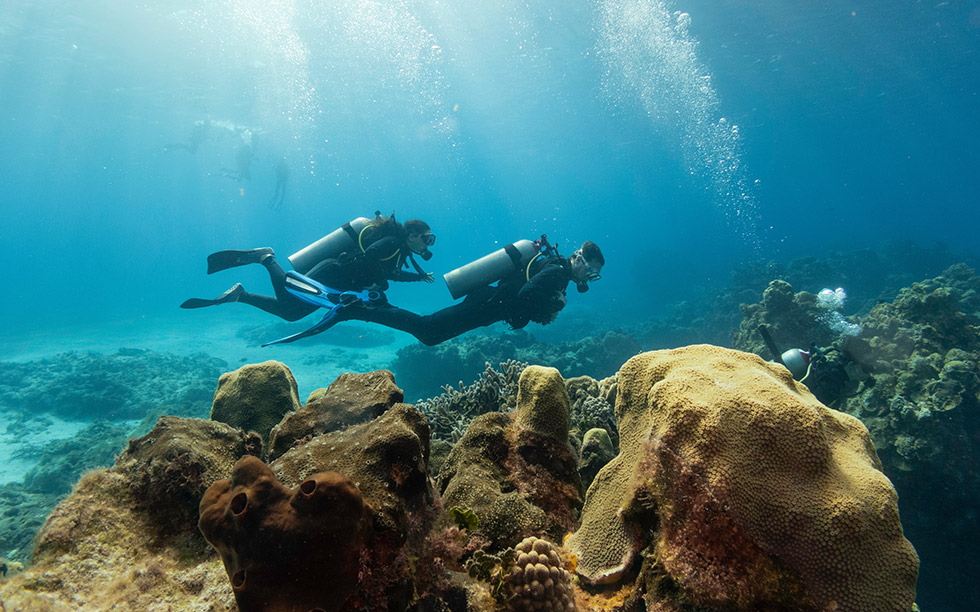
6- How Instructors Can Support Mental Wellness
The SDI approach aligns naturally with these needs:
- Adapted Pace: Tailoring lessons and dive difficulty reduces stress.
- Self-Awareness: Debriefs and reflection encourage calm decision-making.
- Skill Mastery: Repetition and slow practice build confidence.
- Slow Diving Philosophy: Emphasis on enjoyment, not performance.
- Community Building: Buddying, group dives, and club activities create support networks.
These principles help all divers, but they are particularly effective for those coping with trauma.
7- Personal Reflections
Through my journey, diving has become more than a hobby. It’s been a refuge, a teacher, and a connector. I have seen colleagues transform: tense shoulders relax, anxious minds quiet, smiles return. The ocean provides a canvas for rebuilding confidence, reclaiming control, and reconnecting with joy.
For me personally, every dive is a reminder that calm is possible, even after chaos. Every dive is an adventure, a lesson in patience, and an exercise in resilience.
8- The Adventure Beneath the Surface
Diving is adventure and introspection combined. It teaches humility: the ocean is vast, unpredictable, and beautiful. It teaches awareness: every movement, every breath matters. It teaches resilience: every challenge underwater mirrors challenges in life above water.
For those living with PTSD, this combination is uniquely powerful. The thrill of exploration, the discipline of skill, and the serenity of immersion create an experience that is both challenging and restorative. Adventure becomes therapy without the clinical setting — a real, tangible, and deeply human experience.
Conclusion: One Breath at a Time
Scuba diving is not a cure, but it offers moments of clarity, calm, and connection. For first responders and others living with PTSD, it can provide:
✨ One moment where the noise stops.
✨ One moment to simply breathe.
✨ One moment to feel alive again.
These moments matter. They remind us that even after trauma, joy, calm, and wonder are still possible — one dive at a time.
 https://www.tdisdi.com/wp-content/uploads/2026/01/Diving-St.-Eustatius.jpg
628
1200
Joan Solé García
https://www.tdisdi.com/wp-content/uploads/2021/10/header-web-live.png
Joan Solé García2026-01-29 03:00:232026-01-29 03:00:23Diving St. Eustatius
https://www.tdisdi.com/wp-content/uploads/2026/01/Diving-St.-Eustatius.jpg
628
1200
Joan Solé García
https://www.tdisdi.com/wp-content/uploads/2021/10/header-web-live.png
Joan Solé García2026-01-29 03:00:232026-01-29 03:00:23Diving St. Eustatius https://www.tdisdi.com/wp-content/uploads/2026/01/Best-Days-to-Dive.jpg
628
1200
Joan Solé García
https://www.tdisdi.com/wp-content/uploads/2021/10/header-web-live.png
Joan Solé García2026-01-28 04:54:352026-01-28 04:54:35The Best Days to Dive
https://www.tdisdi.com/wp-content/uploads/2026/01/Best-Days-to-Dive.jpg
628
1200
Joan Solé García
https://www.tdisdi.com/wp-content/uploads/2021/10/header-web-live.png
Joan Solé García2026-01-28 04:54:352026-01-28 04:54:35The Best Days to Dive https://www.tdisdi.com/wp-content/uploads/2026/01/Looking-Beyond-the-Dive-Show-Floor.jpg
628
1200
Joan Solé García
https://www.tdisdi.com/wp-content/uploads/2021/10/header-web-live.png
Joan Solé García2026-01-26 05:20:292026-01-26 16:49:00Looking Beyond the Dive Show Floor
https://www.tdisdi.com/wp-content/uploads/2026/01/Looking-Beyond-the-Dive-Show-Floor.jpg
628
1200
Joan Solé García
https://www.tdisdi.com/wp-content/uploads/2021/10/header-web-live.png
Joan Solé García2026-01-26 05:20:292026-01-26 16:49:00Looking Beyond the Dive Show Floor https://www.tdisdi.com/wp-content/uploads/2026/01/ANTARCTIQUE.jpg
628
1200
Joan Solé García
https://www.tdisdi.com/wp-content/uploads/2021/10/header-web-live.png
Joan Solé García2026-01-22 06:32:542026-01-22 06:32:54ANTARCTICA
https://www.tdisdi.com/wp-content/uploads/2026/01/ANTARCTIQUE.jpg
628
1200
Joan Solé García
https://www.tdisdi.com/wp-content/uploads/2021/10/header-web-live.png
Joan Solé García2026-01-22 06:32:542026-01-22 06:32:54ANTARCTICA https://www.tdisdi.com/wp-content/uploads/2026/01/women-idc.jpg
628
1200
Joan Solé García
https://www.tdisdi.com/wp-content/uploads/2021/10/header-web-live.png
Joan Solé García2026-01-21 04:55:202026-01-22 08:16:54Women’s IDC – May 23-31, 2026
https://www.tdisdi.com/wp-content/uploads/2026/01/women-idc.jpg
628
1200
Joan Solé García
https://www.tdisdi.com/wp-content/uploads/2021/10/header-web-live.png
Joan Solé García2026-01-21 04:55:202026-01-22 08:16:54Women’s IDC – May 23-31, 2026 https://www.tdisdi.com/wp-content/uploads/2026/01/women-who-tech-dive-tamara-thomsen.jpg
628
1200
Joan Solé García
https://www.tdisdi.com/wp-content/uploads/2021/10/header-web-live.png
Joan Solé García2026-01-19 04:46:442026-01-19 04:46:44Women Who Tech Dive Tamara Thomsen
https://www.tdisdi.com/wp-content/uploads/2026/01/women-who-tech-dive-tamara-thomsen.jpg
628
1200
Joan Solé García
https://www.tdisdi.com/wp-content/uploads/2021/10/header-web-live.png
Joan Solé García2026-01-19 04:46:442026-01-19 04:46:44Women Who Tech Dive Tamara Thomsen https://www.tdisdi.com/wp-content/uploads/2026/01/DI-Scubility-Program.jpg
628
1200
Joan Solé García
https://www.tdisdi.com/wp-content/uploads/2021/10/header-web-live.png
Joan Solé García2026-01-15 01:42:552026-01-15 01:42:55SDI Scubility Program
https://www.tdisdi.com/wp-content/uploads/2026/01/DI-Scubility-Program.jpg
628
1200
Joan Solé García
https://www.tdisdi.com/wp-content/uploads/2021/10/header-web-live.png
Joan Solé García2026-01-15 01:42:552026-01-15 01:42:55SDI Scubility Program https://www.tdisdi.com/wp-content/uploads/2026/01/Diving-for-Mental-Health.jpg
628
1200
Joan Solé García
https://www.tdisdi.com/wp-content/uploads/2021/10/header-web-live.png
Joan Solé García2026-01-14 04:18:042026-01-14 04:18:04Diving for Mental Health
https://www.tdisdi.com/wp-content/uploads/2026/01/Diving-for-Mental-Health.jpg
628
1200
Joan Solé García
https://www.tdisdi.com/wp-content/uploads/2021/10/header-web-live.png
Joan Solé García2026-01-14 04:18:042026-01-14 04:18:04Diving for Mental Health
Ostavite odgovor
Želite li da se priključite diskusiji?Slobodno popunite!