
Bringing Every Diver Home
Actions and Training That Keep Public Safety Dive Teams Safe
Article by Thomas Powell
Public safety diving is one of the most complex and demanding disciplines within the scuba community. Unlike recreational diving, these men and women willingly enter cold, dark, contaminated, and unpredictable waters, not for personal adventure, but to serve their communities. From recovering evidence to supporting law enforcement or assisting in tragic recoveries, public safety divers perform missions that carry high stakes and even higher risks.
No matter the operation, one truth must guide every decision: the number one priority is to bring every diver home safely. Achieving that goal requires a combination of the right mindset, structured training, reliable equipment, and constant vigilance.
This article brings together essential lessons and training standards that can help public safety dive teams ensure safety while still meeting their mission objectives.
1-The Right Mindset on Your First Call
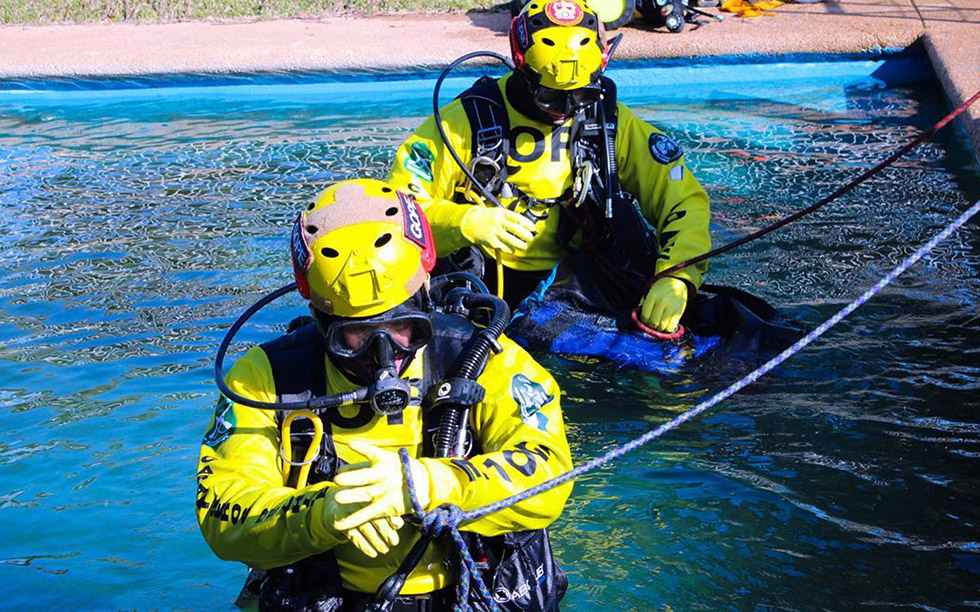
For a new team member, the first real-world callout is unforgettable. Hours of training, the camaraderie of teammates, and the anticipation of finally using your skills come rushing in. But the butterflies in your stomach cannot overshadow the reality: you are not Superman.
Dive operations are not pool drills. They are unpredictable, often chaotic, and rarely ideal. Attempting to take on every task yourself will only lead to exhaustion and mistakes. Success depends on teamwork. Trust your colleagues to share the workload, follow procedures, and stay methodical.
Equally important, remember that most public safety dive operations are not races. Unless there is a clear and immediate threat to human life, time is on your side. Rushing leads to accidents. Take time to plan the operation, prepare equipment, and communicate clearly. Once you are underwater, patience and calmness are essential, especially in blackwater environments where divers “battle dragons” in the darkness.
When stress builds, slow your breathing and communicate with your tender. If fear becomes overwhelming, surface safely and allow another diver to step in. There is no shame in recognizing your limits. Public safety diving is a team effort, not a contest of bravery.
2-Learning from Experience and Mentorship
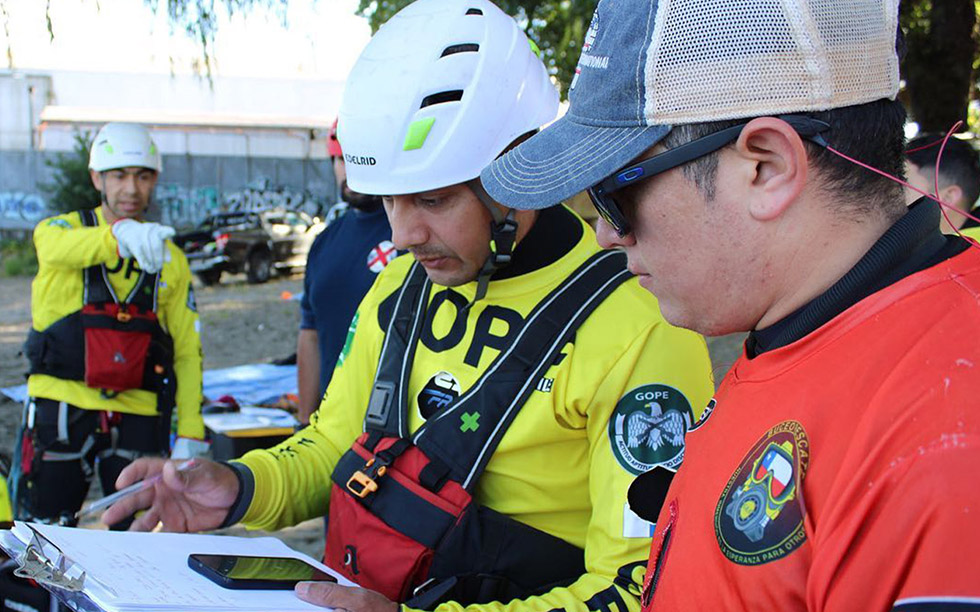
Every dive team has “old hats,” the seasoned members who have been through countless missions. Watch them closely. Their habits, from how they stage gear to how they handle stress, come from years of trial and error.
Seek their advice after a mission. What do they do differently? What mistakes have they learned from? Public safety diving often teaches more through failure than success, and the wisdom of experience can prevent newer divers from repeating costly errors.
Above all, understand that it is okay to be overwhelmed on your first few calls. If you are confused, step aside, observe, and assist in ways that don’t disrupt operations. In time, with repetition and mentorship, the chaos will make sense and you will one day become the mentor helping the next generation of divers.
3-Encapsulation and Essential Gear Training
Mindset alone isn’t enough. Safety requires training with the right equipment in the harsh environments where public safety divers operate.
Encapsulation is the foundation. Divers must be trained to operate in dry suits, full-face masks, hoods, boots, and dry gloves. These systems protect against contaminated water, chemical exposure, and biohazards. Recreational divers may dabble in dry suit or full-face mask training through SDI, but operational-level mastery comes through ERDI programs that focus on mission-specific needs.
Encapsulation also ensures divers can trust their gear. Knowing how to don, adjust, and troubleshoot equipment under stress is critical. A diver fumbling with a mask strap in zero visibility has already lost valuable time and safety margin.
4-Structured Training: Building Skills That Keep Teams Alive
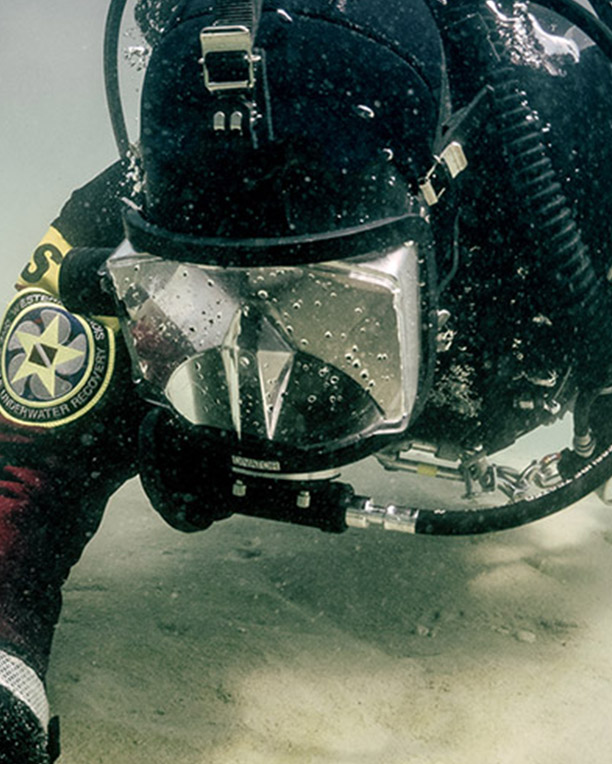
Training is what transforms volunteers into cohesive teams. ERDI’s Emergency Response Diver 1 (ERD 1) course introduces divers to the operational environment, recovery methods, planning procedures, and team-based simulations. It bridges the gap between recreational skills and the demands of real missions.
From there, specialized training must reflect local conditions. Teams operating near rivers or swift currents may need ERD Swift Water training. Teams relying on boats might require ERD Small Boat Operations. Communities that host major events may benefit from ERD Threat Assessment training. Tailored training ensures that when the call comes, divers aren’t learning on the fly—they’re executing rehearsed procedures.
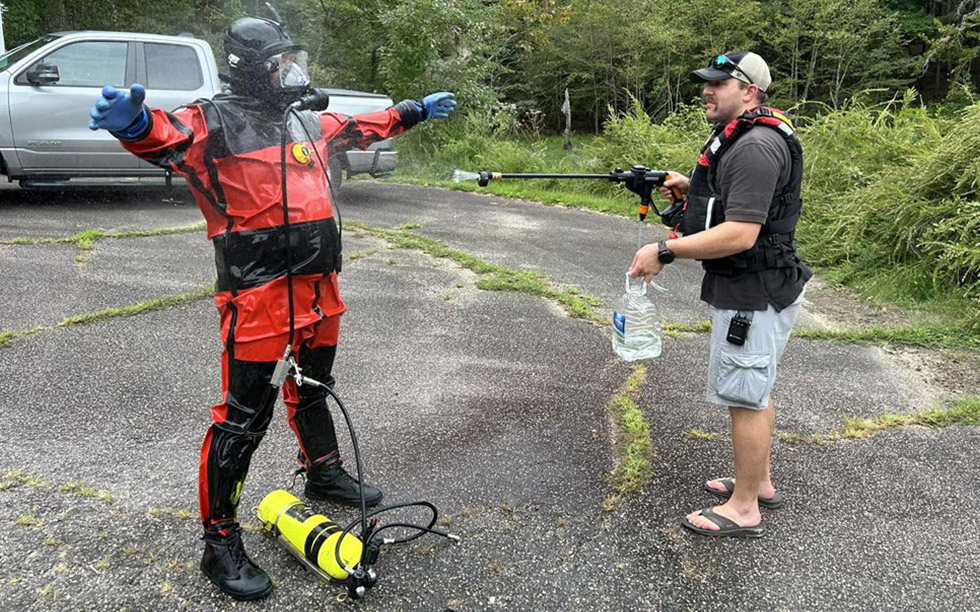
Every team, however, must undergo ERD Contaminated Water training. All public safety divers must assume every body of water is contaminated until proven otherwise. Learning proper decontamination procedures—scrubbing gear, removing exposure suits safely, and preventing cross-contamination—can be the difference between a safe mission and long-term health issues.
Finally, advanced teams often cap their progression with Emergency Response Diver 2 (ERD 2), a program that integrates all previously learned skills into worst-case-scenario simulations. ERD 2 challenges teams to streamline protocols, solidify trust, and prepare for missions where failure is not an option.
5-Continuous Training and Skill Maintenance
One truth about diving: skills fade quickly without practice. Teams cannot consider themselves “ready” after a few courses. Regular training cycles are essential to maintain proficiency, sharpen judgment, and keep problem-solving instincts sharp.
A weak link in training can compromise an entire operation. To prevent this, ERDI recommends at least one team member trains as an ERD Supervisor for every four team members, leaders responsible for planning drills or in-service training, and ensuring readiness.
Public safety divers must constantly train for worst-case scenarios, because that preparation is what minimizes risk when real emergencies happen.
6-Scene Safety and Risk vs. Benefit
No operation begins in the water—it begins at the scene. Every team member is a dive safety officer, responsible for spotting hazards, voicing concerns, and refusing unsafe practices.
Sometimes, that means changing the entry point, delaying an operation, or even calling off a dive entirely. No piece of evidence, no vehicle, and no recovery is worth a diver’s life.
Risk-benefit analysis must be constant. If evidence will not make or break a case, but diving conditions are hazardous, the dive may not be justified. When in doubt, safety wins. It is far better to explain why a dive was not attempted than to face the consequences of losing a team member.
7-The Role of Proper Equipment and Maintenance
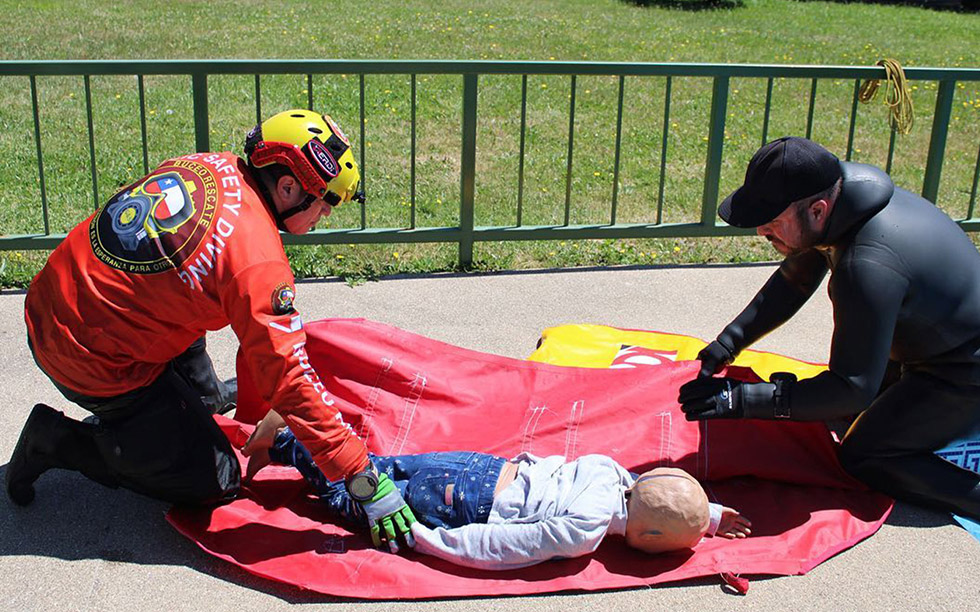
Training prepares divers, but equipment supports them. Teams must standardize gear configurations so that every diver knows exactly where to find tools and emergency systems on a teammate’s rig. Switch blocks, strong tether lines, sonar systems, and robust decontamination setups are all critical.
Equally important, equipment must be serviced regularly. Public safety gear is exposed to the worst conditions imaginable, from chemical pollutants to sharp debris. Regular maintenance prevents small issues from becoming catastrophic failures underwater.
Conclusion: Safety Above All
Public safety diving is not about heroics or headlines—it is about discipline, preparation, and teamwork. The mission may be evidence recovery, body retrieval, or hazard assessment, but the true objective never changes: every diver must come home safely.
By embracing mentorship, committing to ongoing training, understanding risk versus benefit, and maintaining both equipment and discipline, dive teams can reduce risks and improve outcomes. Communities rely on public safety divers, but those divers must rely on one another to survive their missions.
Safety is not the result of luck—it is the result of preparation. Train for the worst, work as a team, and always prioritize bringing every diver home.
 https://www.tdisdi.com/wp-content/uploads/2026/01/Diving-St.-Eustatius.jpg
628
1200
Joan Solé García
/wp-content/uploads/2021/10/header-web-live.png
Joan Solé García2026-01-29 03:00:232026-01-29 03:00:23Diving St. Eustatius
https://www.tdisdi.com/wp-content/uploads/2026/01/Diving-St.-Eustatius.jpg
628
1200
Joan Solé García
/wp-content/uploads/2021/10/header-web-live.png
Joan Solé García2026-01-29 03:00:232026-01-29 03:00:23Diving St. Eustatius https://www.tdisdi.com/wp-content/uploads/2026/01/Best-Days-to-Dive.jpg
628
1200
Joan Solé García
/wp-content/uploads/2021/10/header-web-live.png
Joan Solé García2026-01-28 04:54:352026-01-28 04:54:35The Best Days to Dive
https://www.tdisdi.com/wp-content/uploads/2026/01/Best-Days-to-Dive.jpg
628
1200
Joan Solé García
/wp-content/uploads/2021/10/header-web-live.png
Joan Solé García2026-01-28 04:54:352026-01-28 04:54:35The Best Days to Dive https://www.tdisdi.com/wp-content/uploads/2026/01/Looking-Beyond-the-Dive-Show-Floor.jpg
628
1200
Joan Solé García
/wp-content/uploads/2021/10/header-web-live.png
Joan Solé García2026-01-26 05:20:292026-01-26 16:49:00Looking Beyond the Dive Show Floor
https://www.tdisdi.com/wp-content/uploads/2026/01/Looking-Beyond-the-Dive-Show-Floor.jpg
628
1200
Joan Solé García
/wp-content/uploads/2021/10/header-web-live.png
Joan Solé García2026-01-26 05:20:292026-01-26 16:49:00Looking Beyond the Dive Show Floor https://www.tdisdi.com/wp-content/uploads/2026/01/ANTARCTIQUE.jpg
628
1200
Joan Solé García
/wp-content/uploads/2021/10/header-web-live.png
Joan Solé García2026-01-22 06:32:542026-01-22 06:32:54ANTARCTICA
https://www.tdisdi.com/wp-content/uploads/2026/01/ANTARCTIQUE.jpg
628
1200
Joan Solé García
/wp-content/uploads/2021/10/header-web-live.png
Joan Solé García2026-01-22 06:32:542026-01-22 06:32:54ANTARCTICA https://www.tdisdi.com/wp-content/uploads/2026/01/women-idc.jpg
628
1200
Joan Solé García
/wp-content/uploads/2021/10/header-web-live.png
Joan Solé García2026-01-21 04:55:202026-01-22 08:16:54Women’s IDC – May 23-31, 2026
https://www.tdisdi.com/wp-content/uploads/2026/01/women-idc.jpg
628
1200
Joan Solé García
/wp-content/uploads/2021/10/header-web-live.png
Joan Solé García2026-01-21 04:55:202026-01-22 08:16:54Women’s IDC – May 23-31, 2026 https://www.tdisdi.com/wp-content/uploads/2026/01/women-who-tech-dive-tamara-thomsen.jpg
628
1200
Joan Solé García
/wp-content/uploads/2021/10/header-web-live.png
Joan Solé García2026-01-19 04:46:442026-01-19 04:46:44Women Who Tech Dive Tamara Thomsen
https://www.tdisdi.com/wp-content/uploads/2026/01/women-who-tech-dive-tamara-thomsen.jpg
628
1200
Joan Solé García
/wp-content/uploads/2021/10/header-web-live.png
Joan Solé García2026-01-19 04:46:442026-01-19 04:46:44Women Who Tech Dive Tamara Thomsen https://www.tdisdi.com/wp-content/uploads/2026/01/DI-Scubility-Program.jpg
628
1200
Joan Solé García
/wp-content/uploads/2021/10/header-web-live.png
Joan Solé García2026-01-15 01:42:552026-01-15 01:42:55SDI Scubility Program
https://www.tdisdi.com/wp-content/uploads/2026/01/DI-Scubility-Program.jpg
628
1200
Joan Solé García
/wp-content/uploads/2021/10/header-web-live.png
Joan Solé García2026-01-15 01:42:552026-01-15 01:42:55SDI Scubility Program https://www.tdisdi.com/wp-content/uploads/2026/01/Diving-for-Mental-Health.jpg
628
1200
Joan Solé García
/wp-content/uploads/2021/10/header-web-live.png
Joan Solé García2026-01-14 04:18:042026-01-14 04:18:04Diving for Mental Health
https://www.tdisdi.com/wp-content/uploads/2026/01/Diving-for-Mental-Health.jpg
628
1200
Joan Solé García
/wp-content/uploads/2021/10/header-web-live.png
Joan Solé García2026-01-14 04:18:042026-01-14 04:18:04Diving for Mental Health
Efterlad et svar
Vil du deltage i diskussionen ?Du er velkommen til at bidrage !